curator Terezie Nekvindová
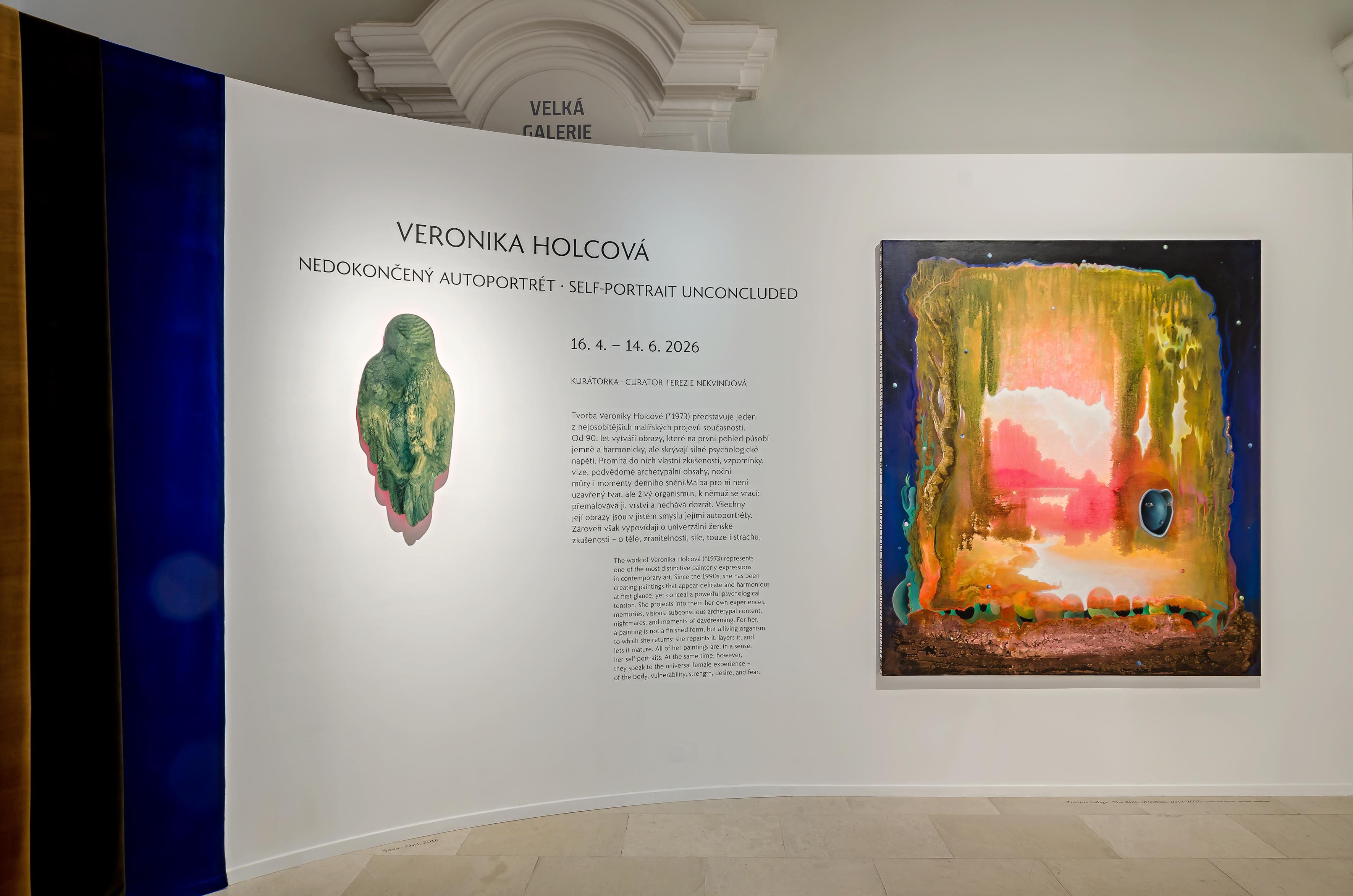
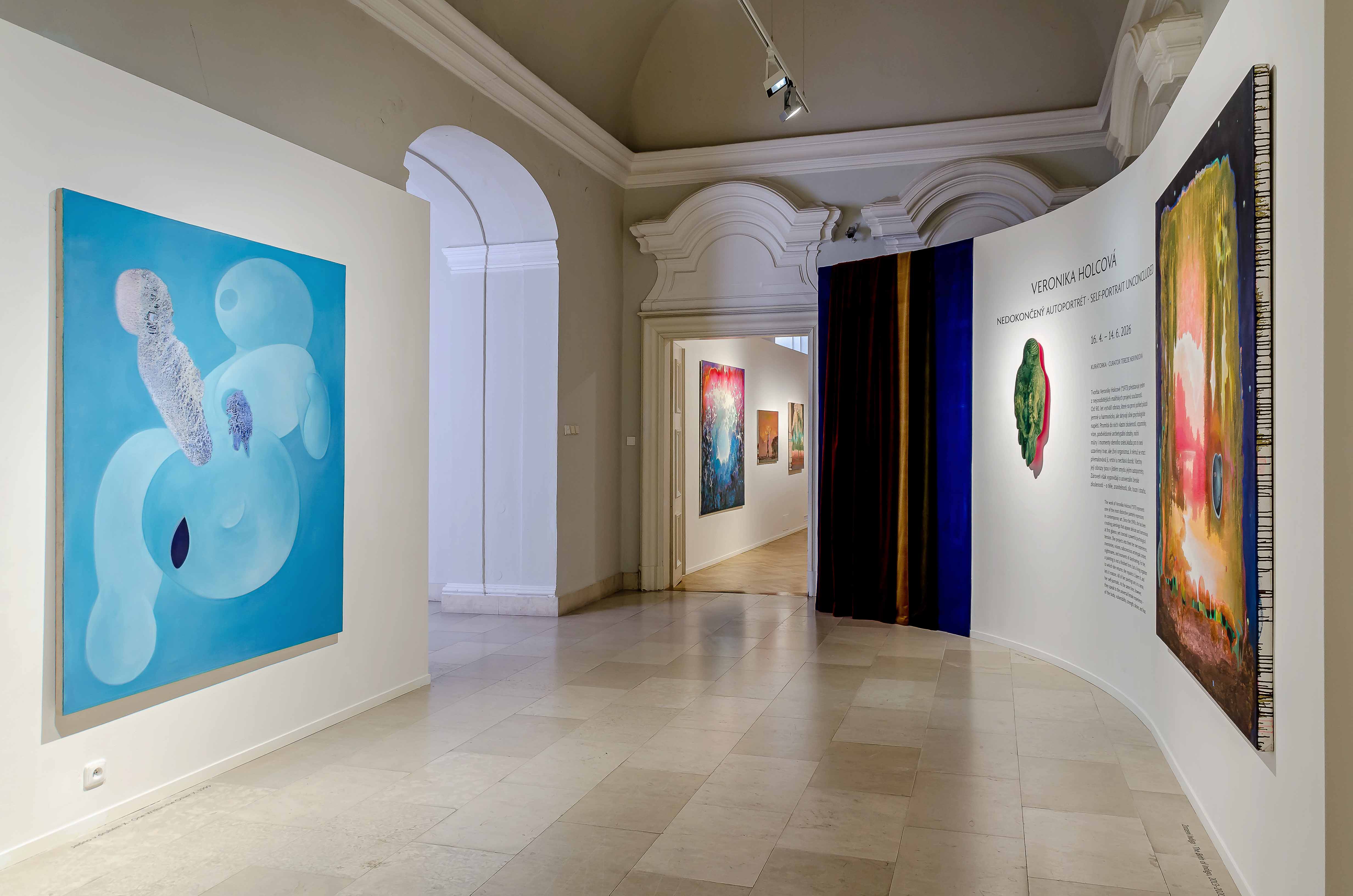
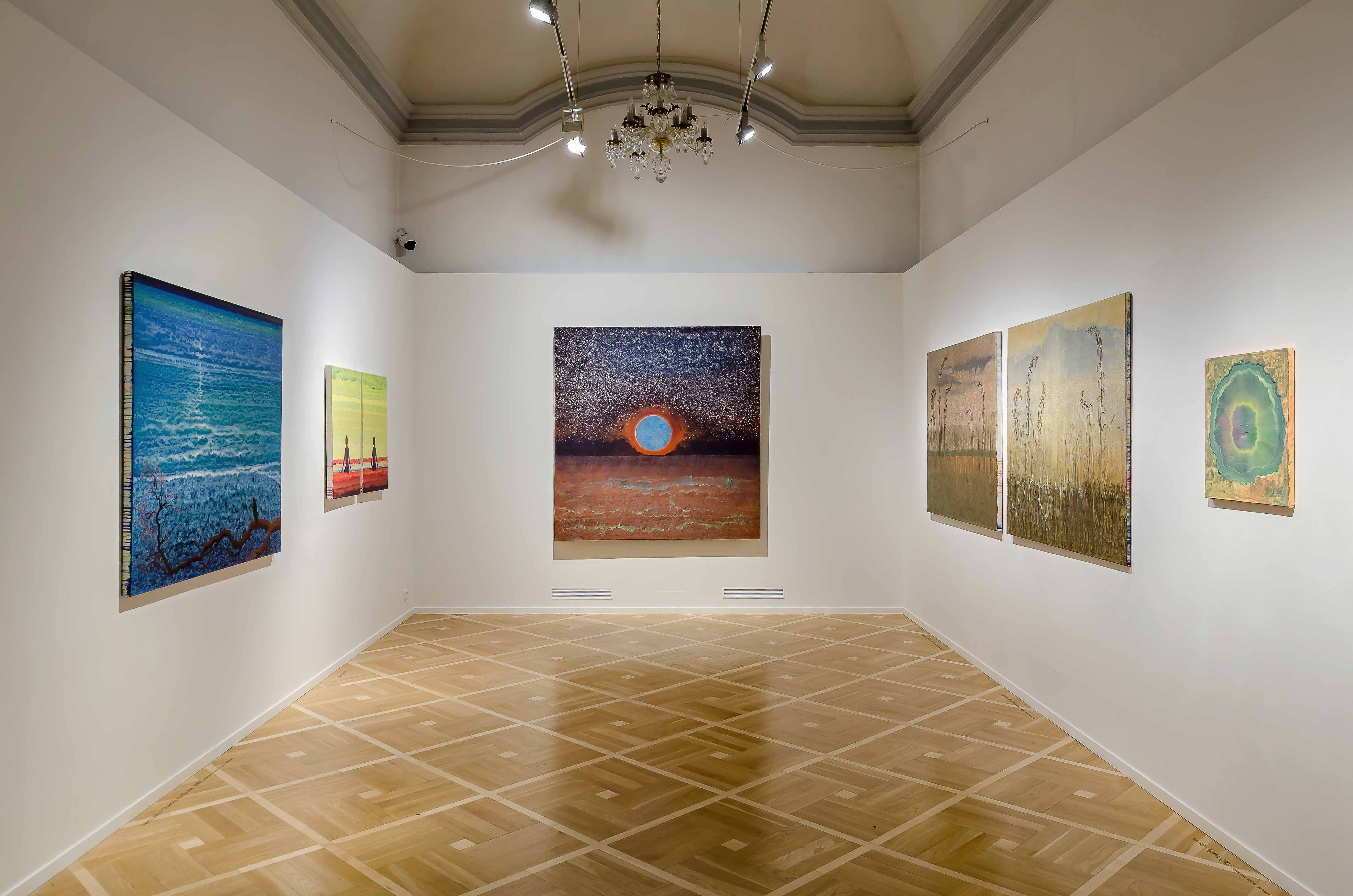
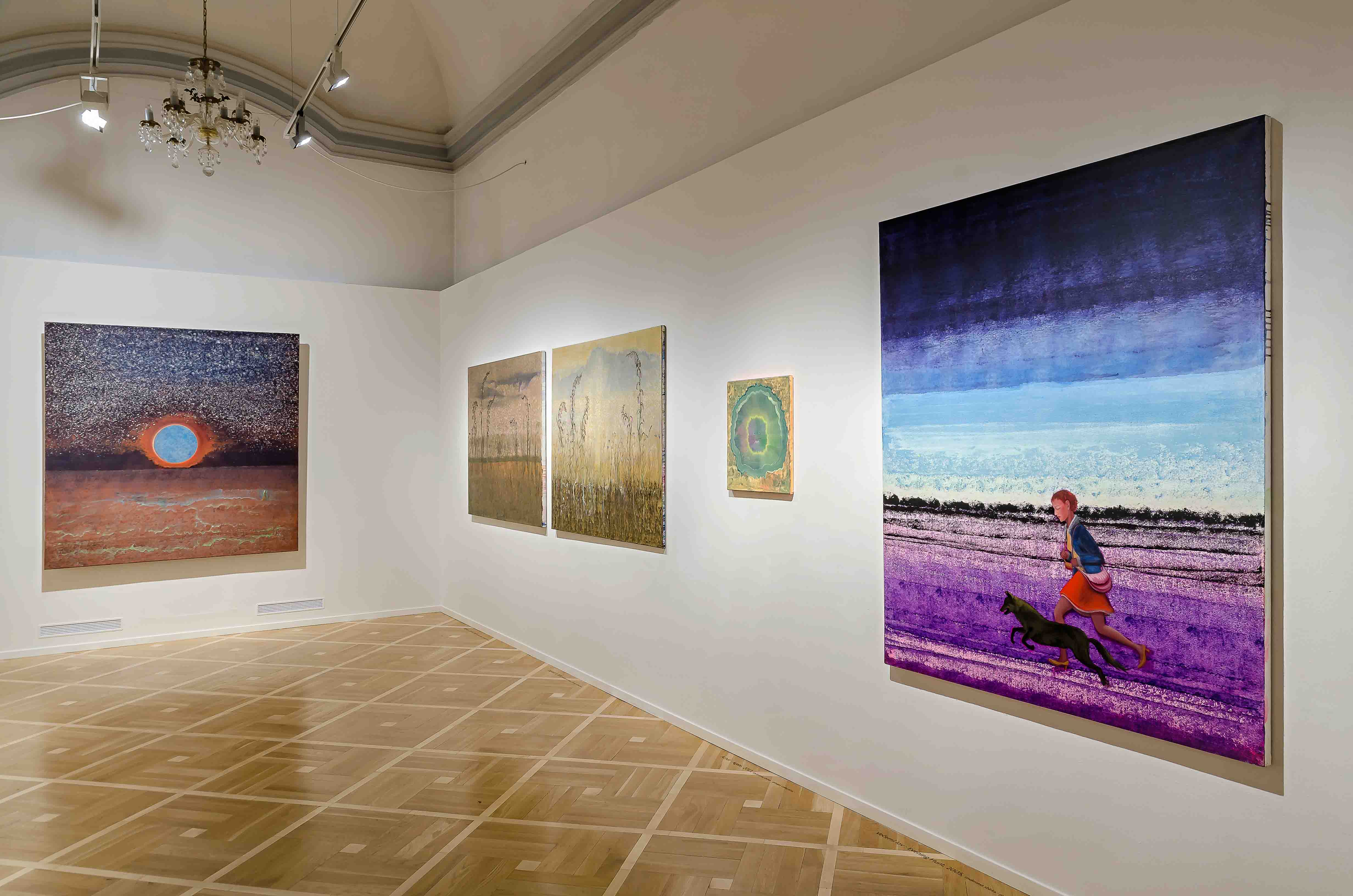
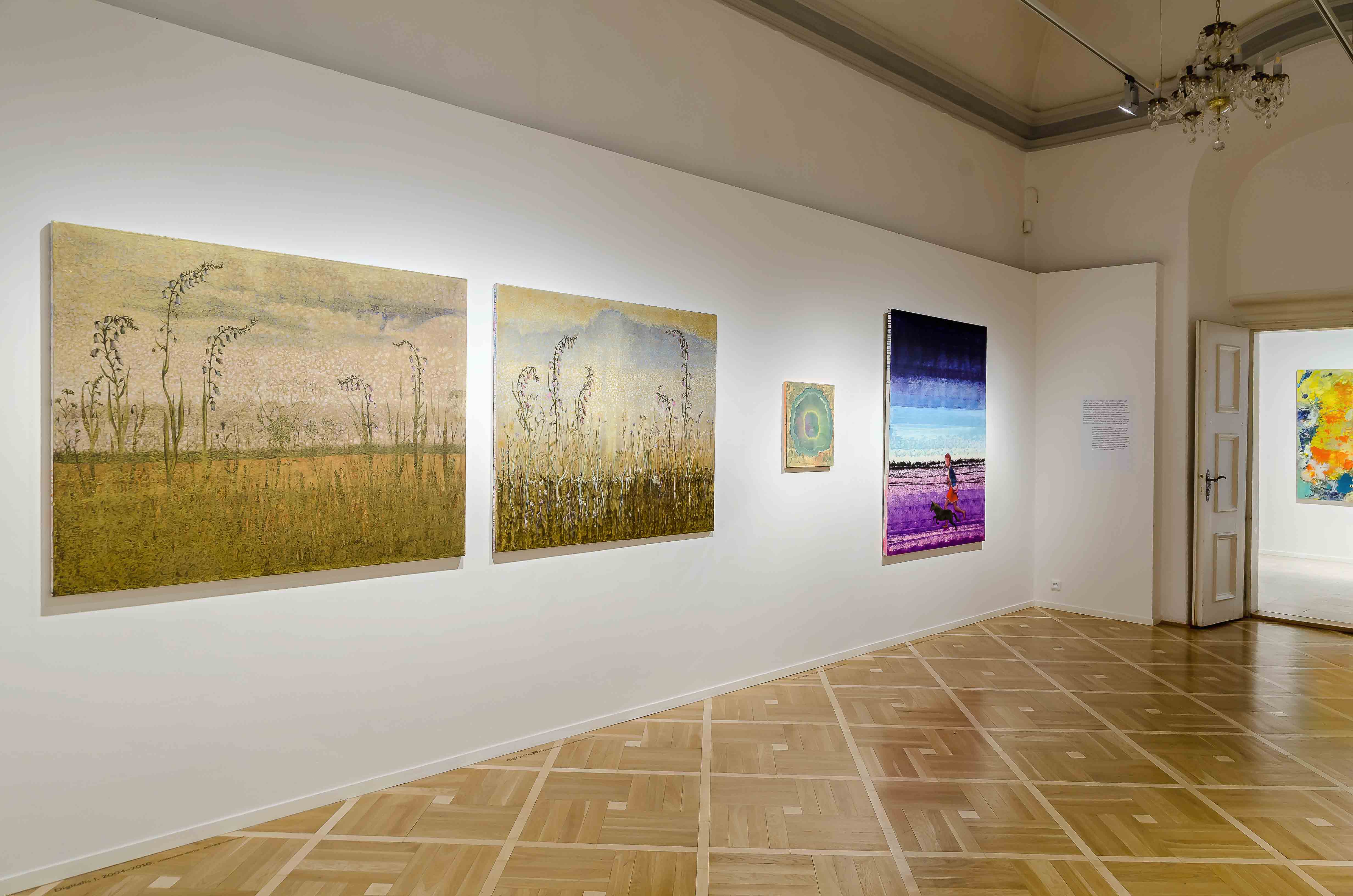
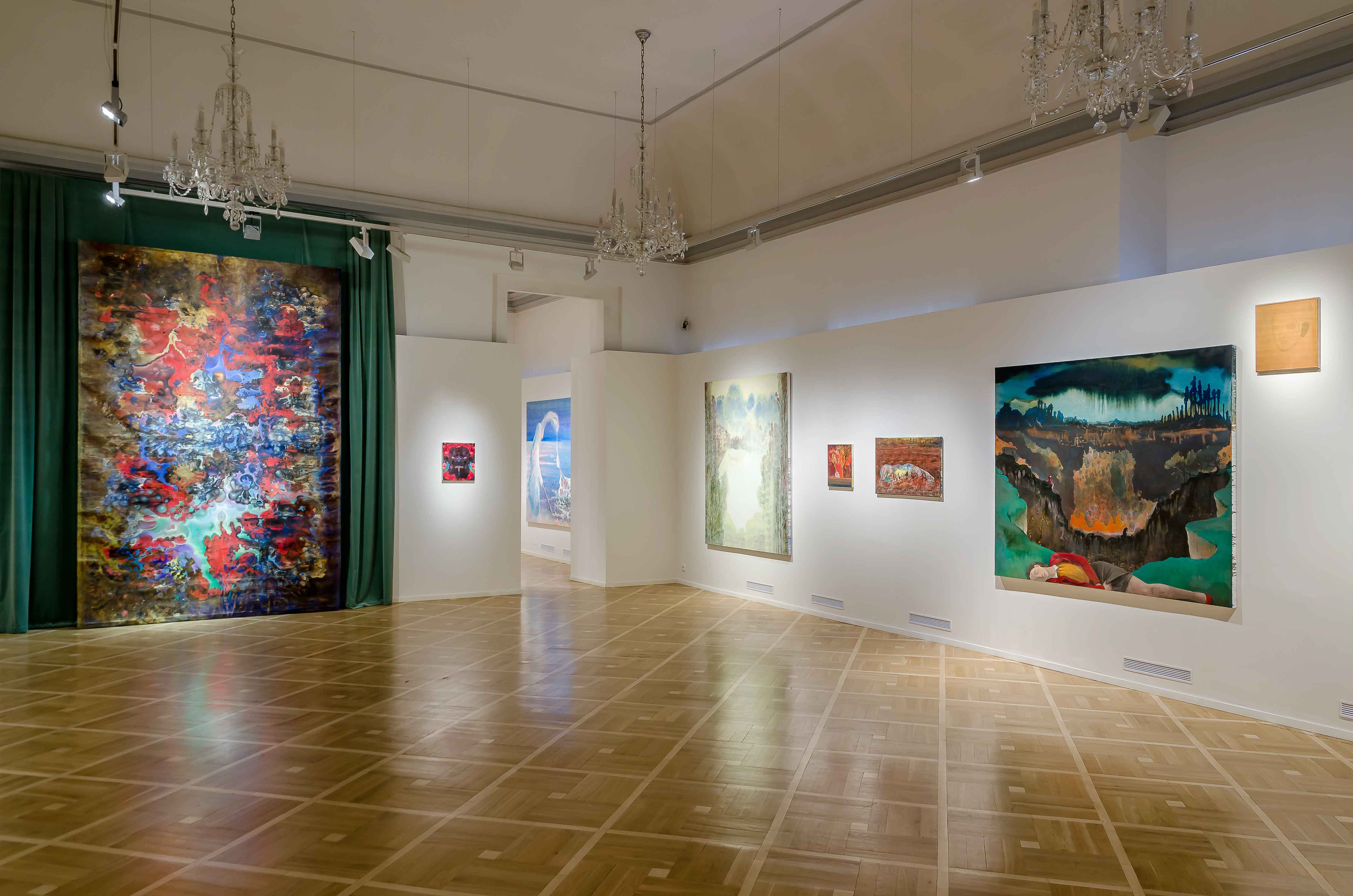
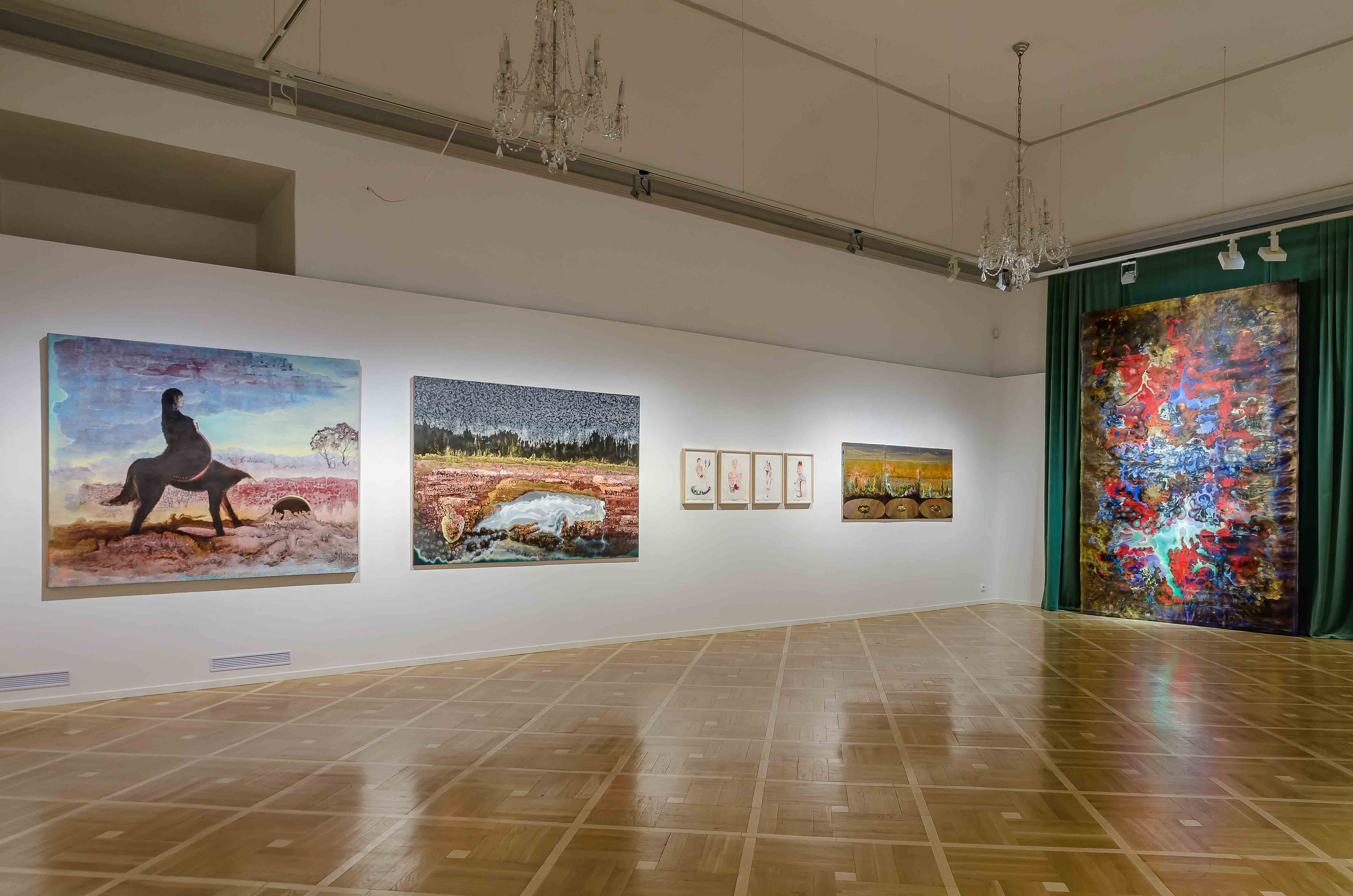
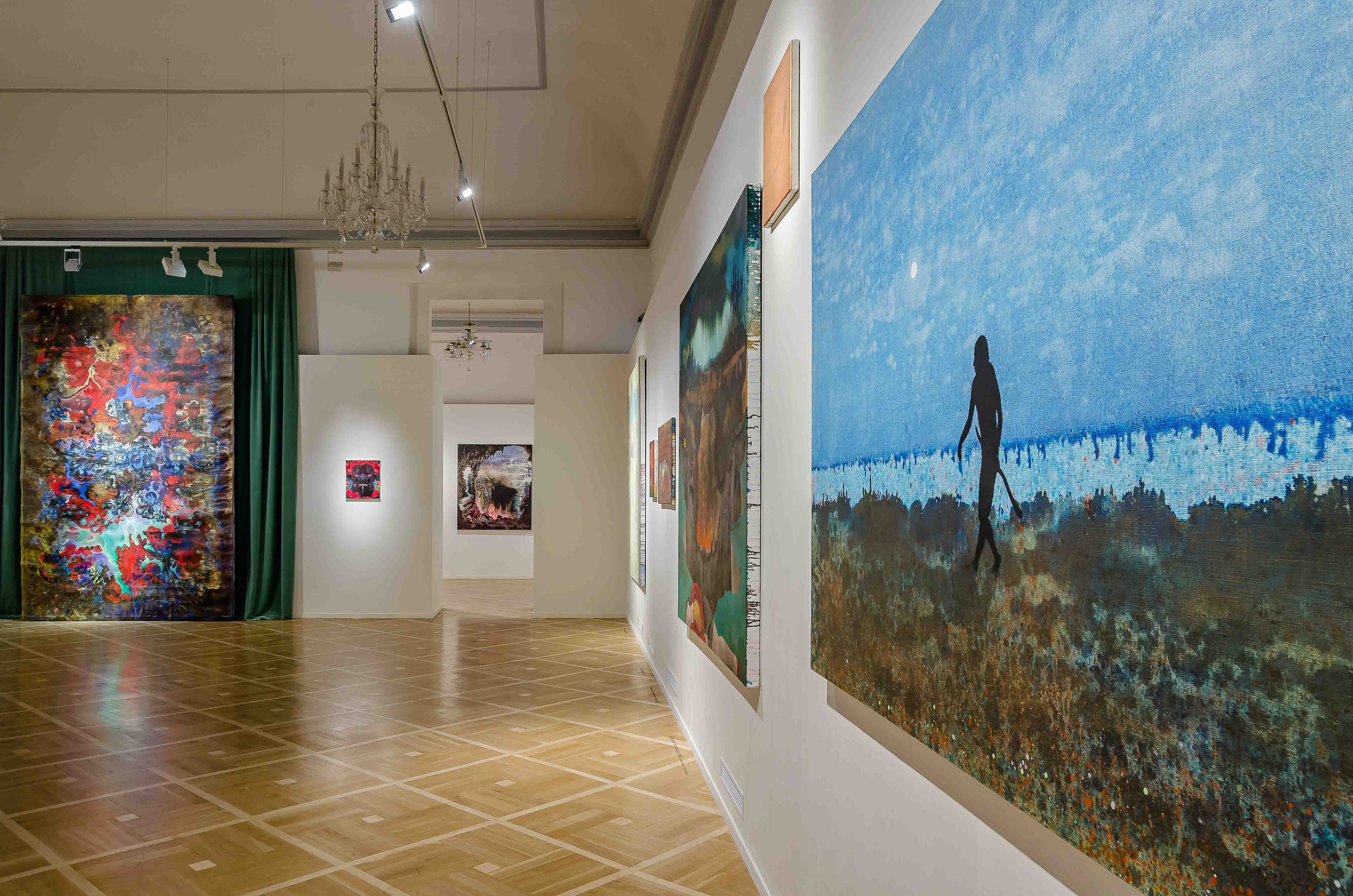
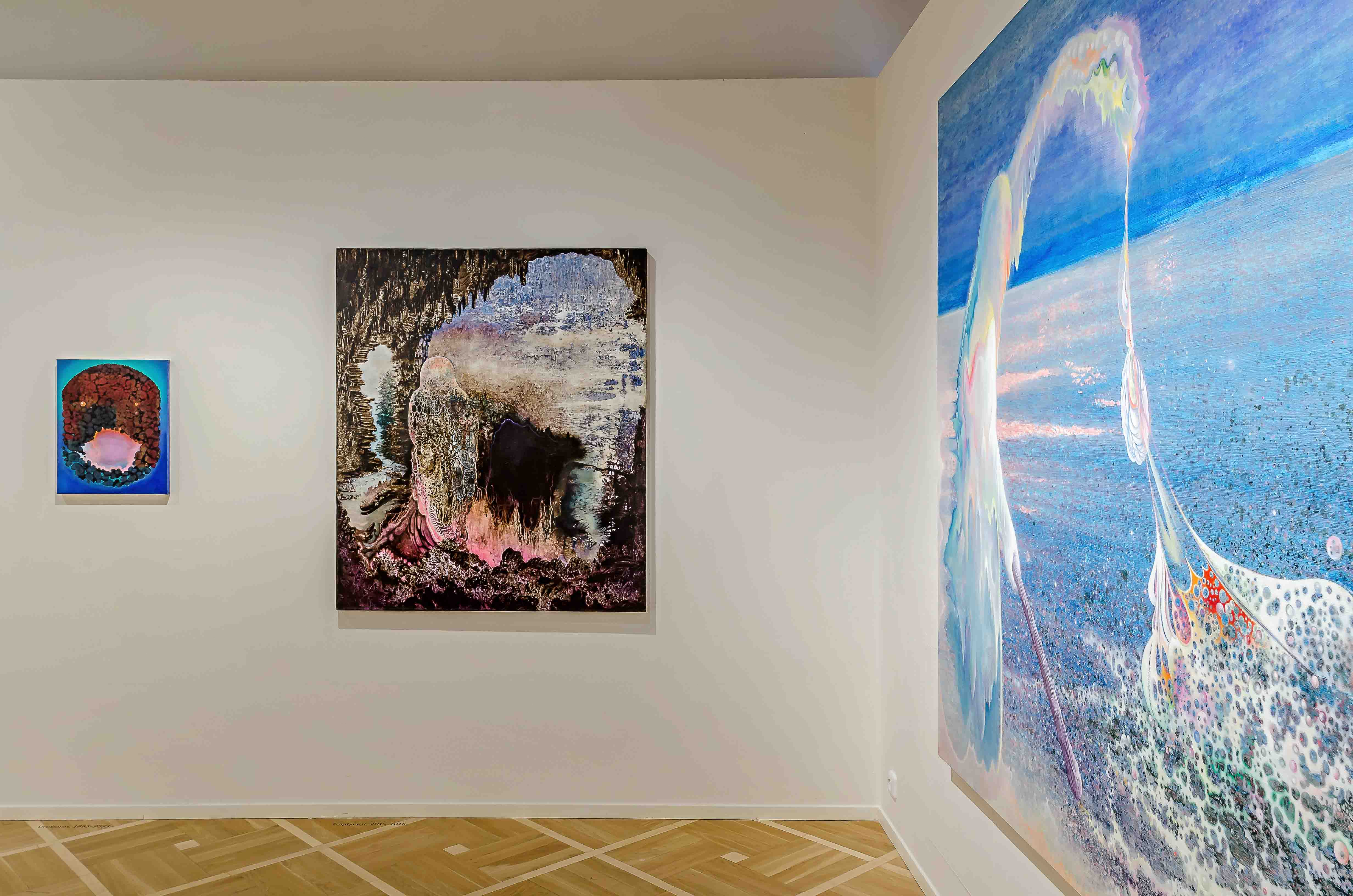
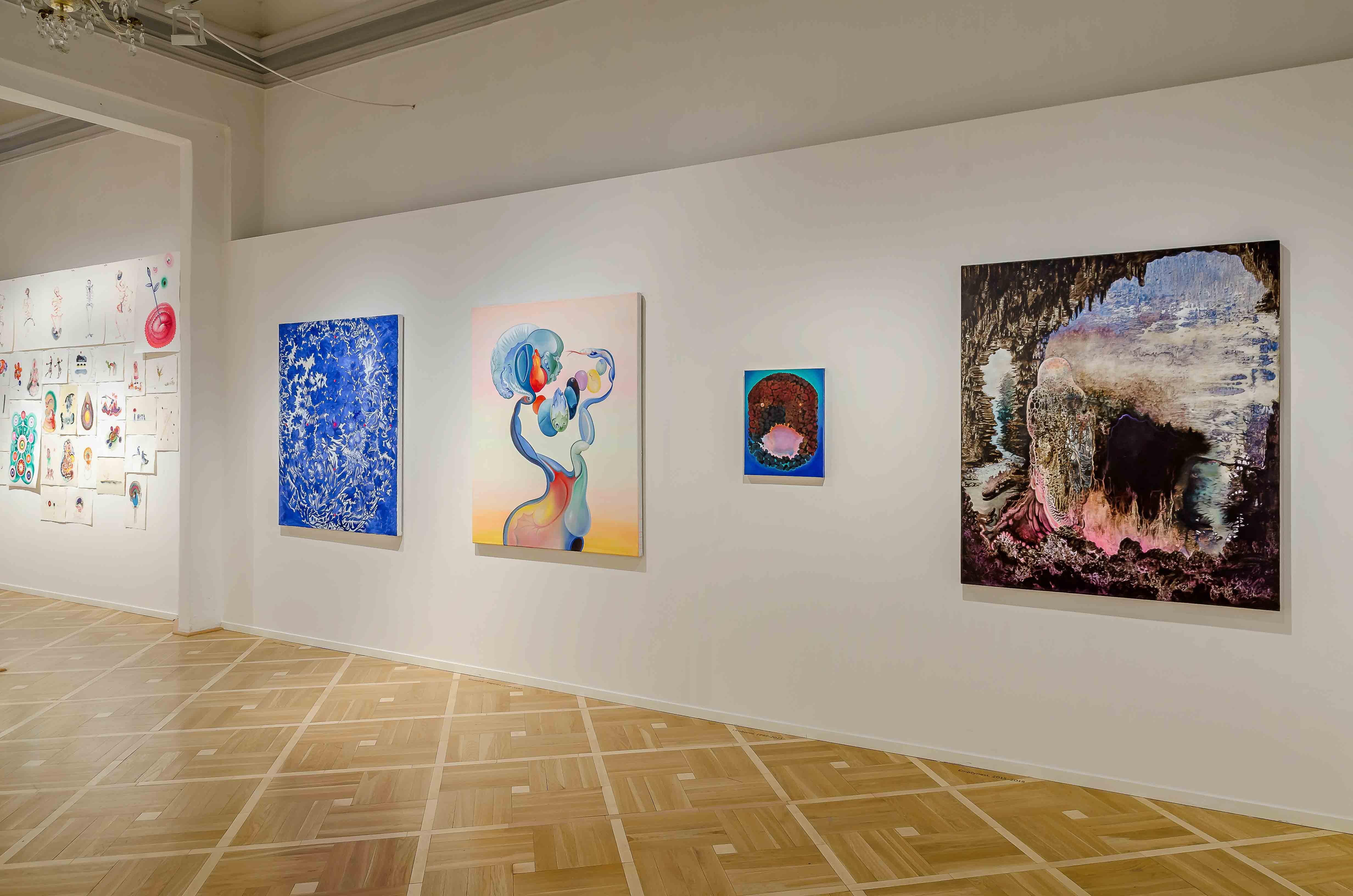
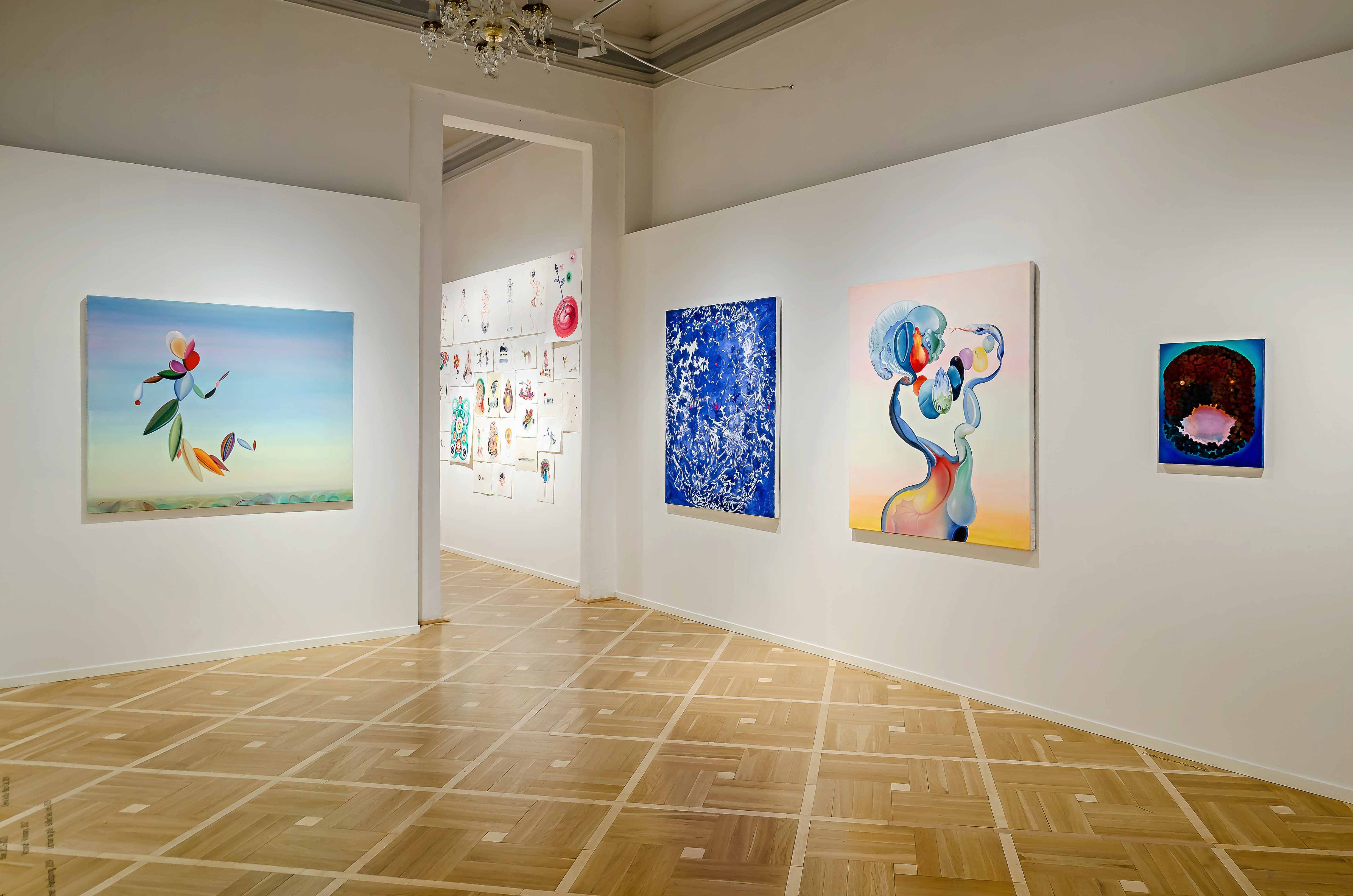
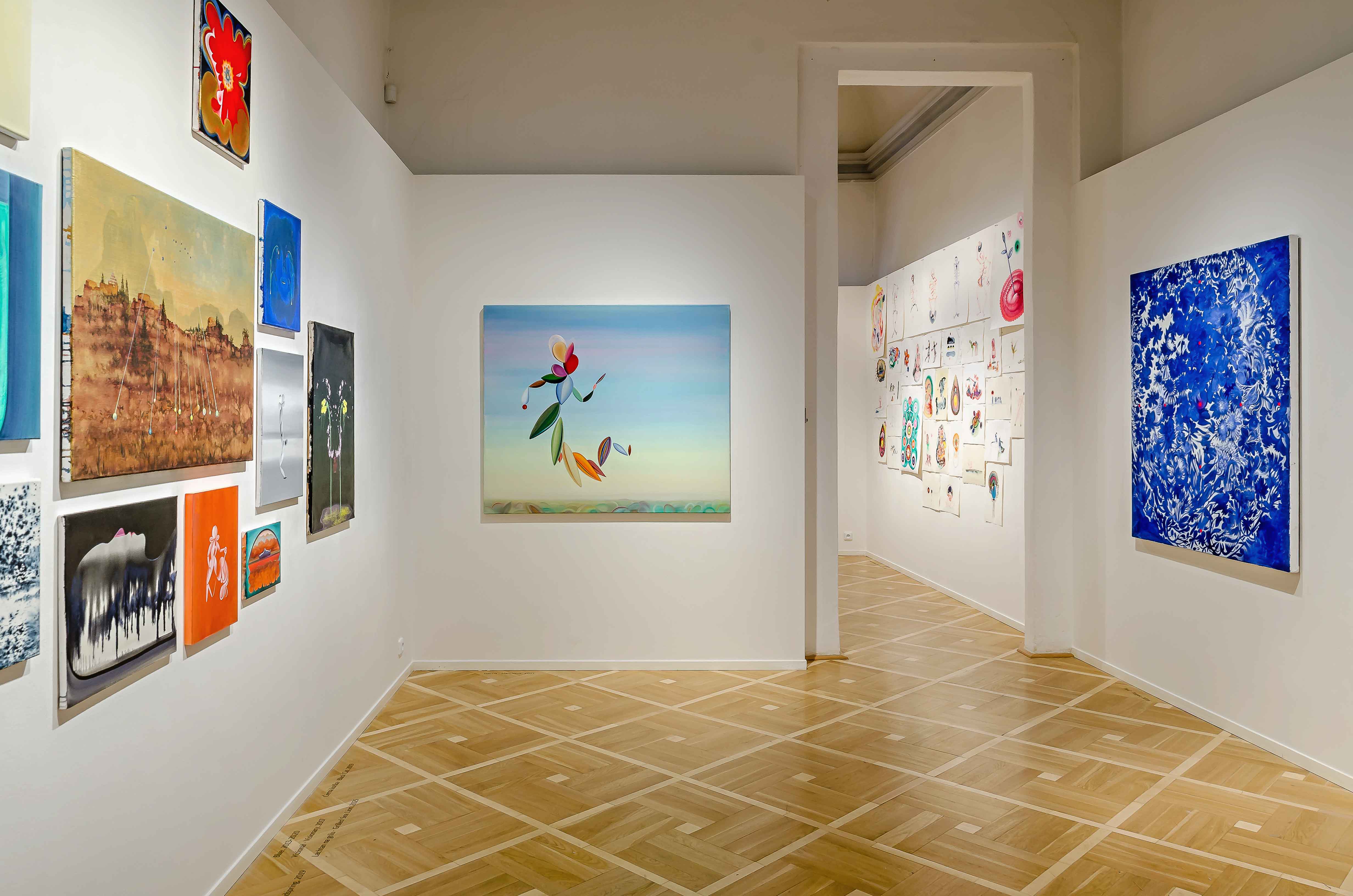
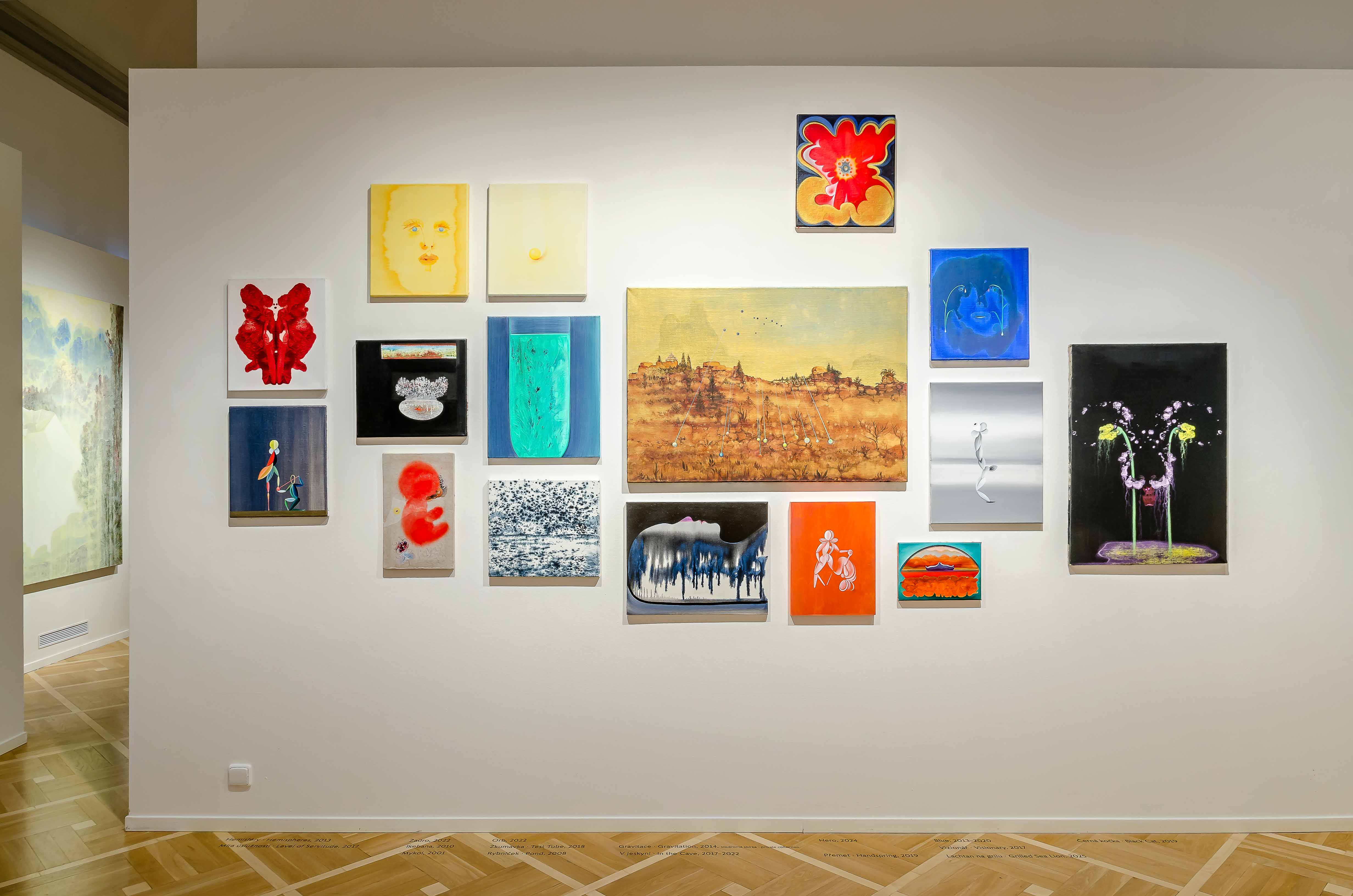
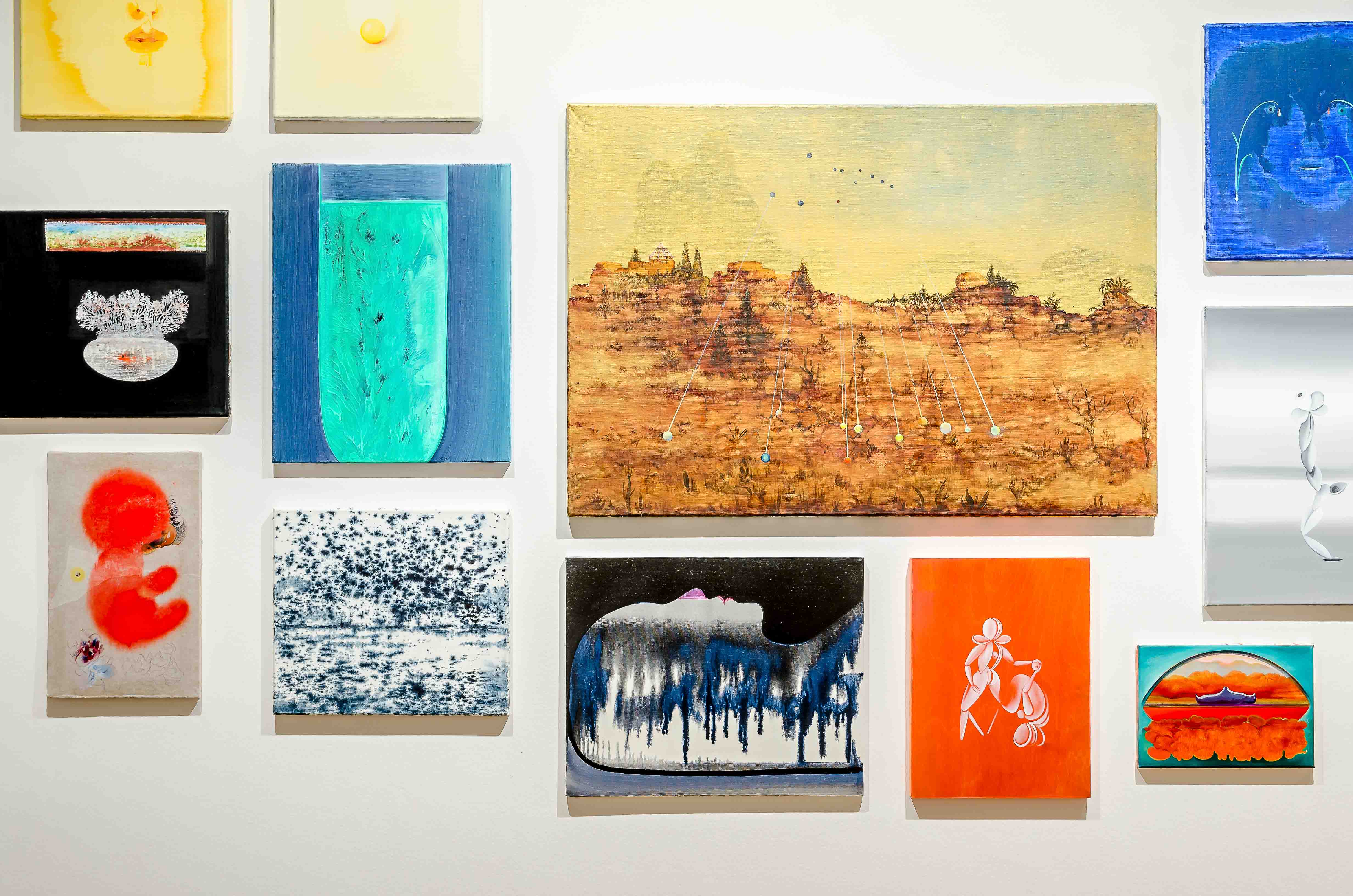
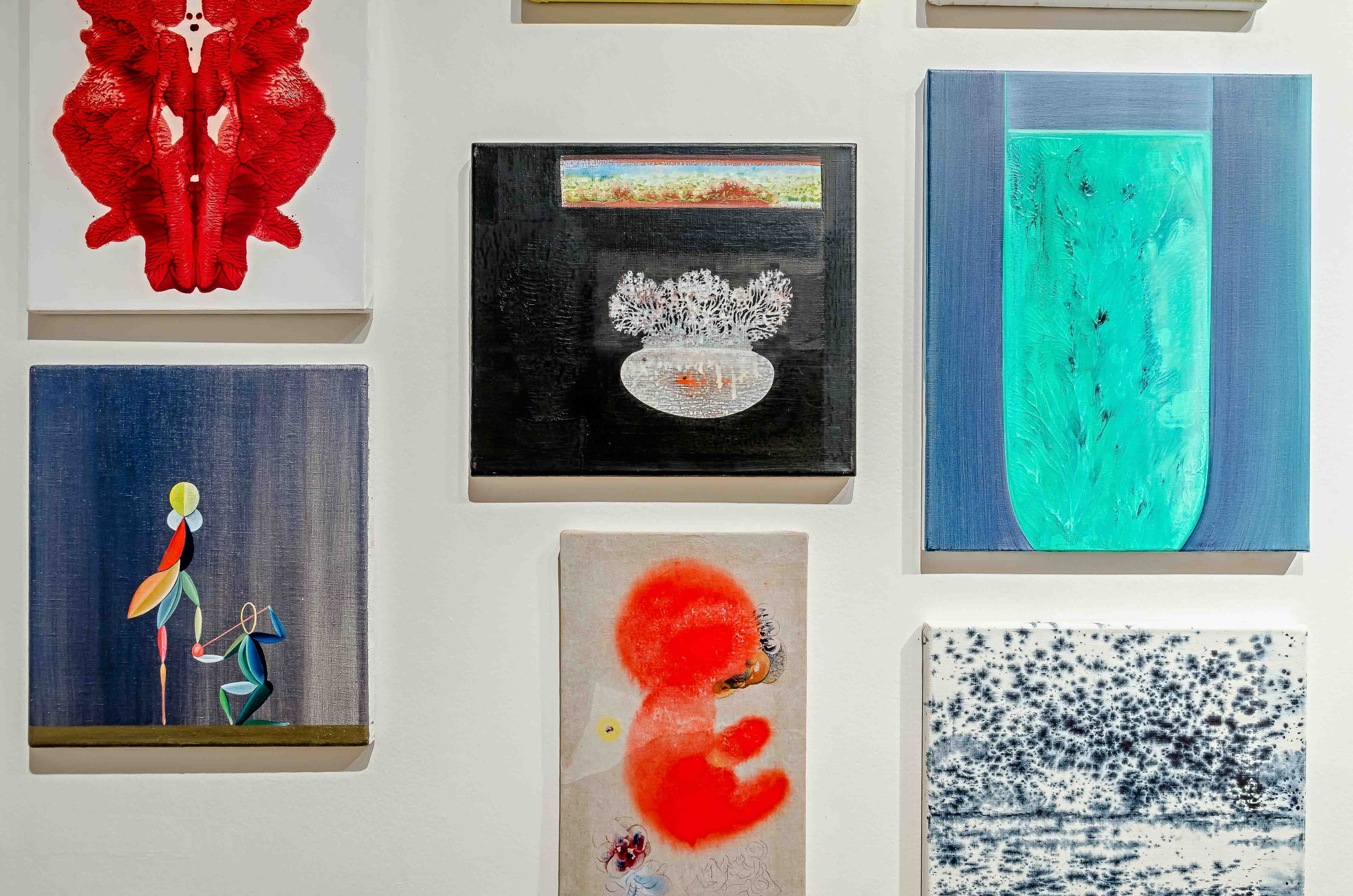
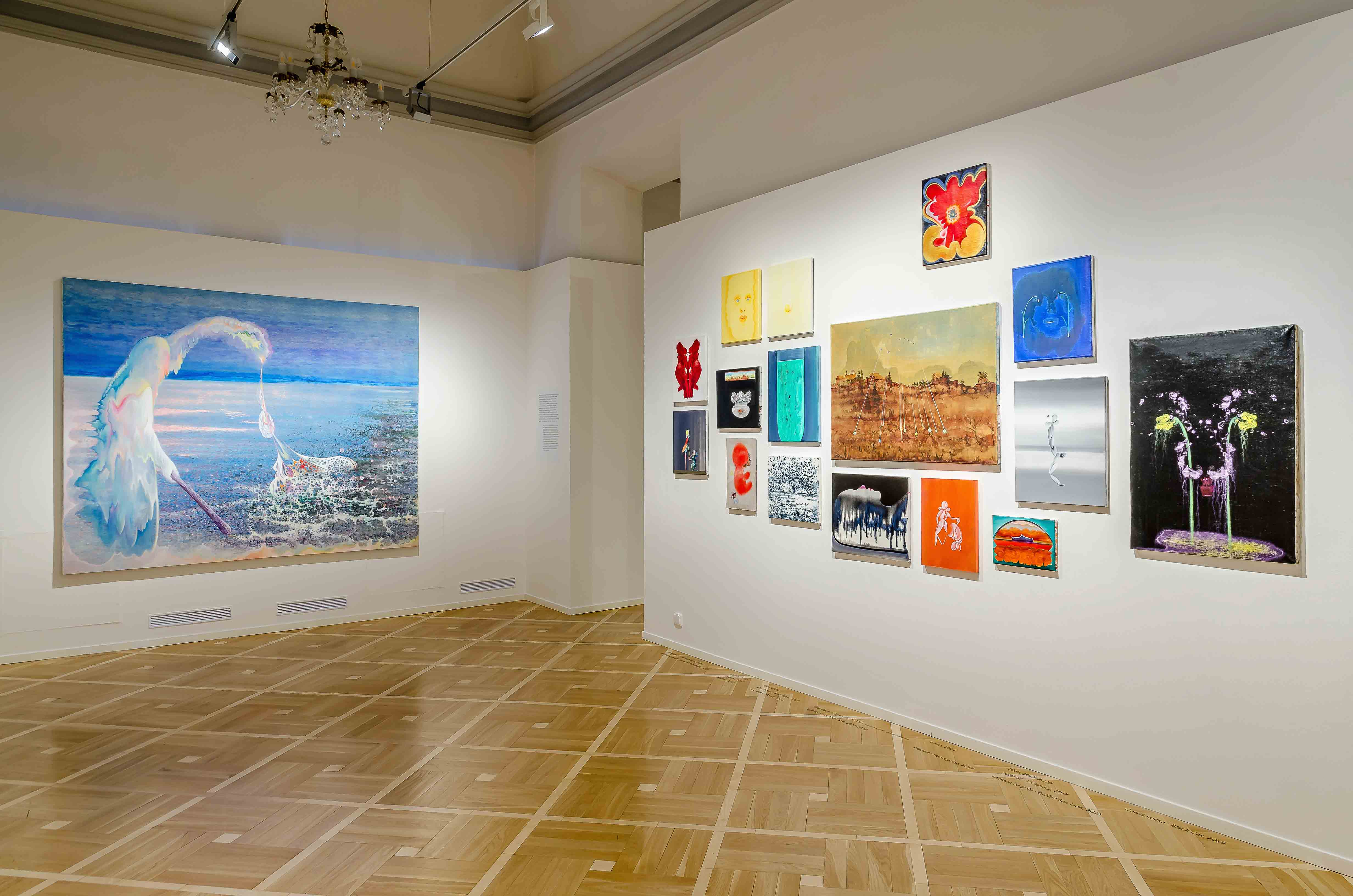
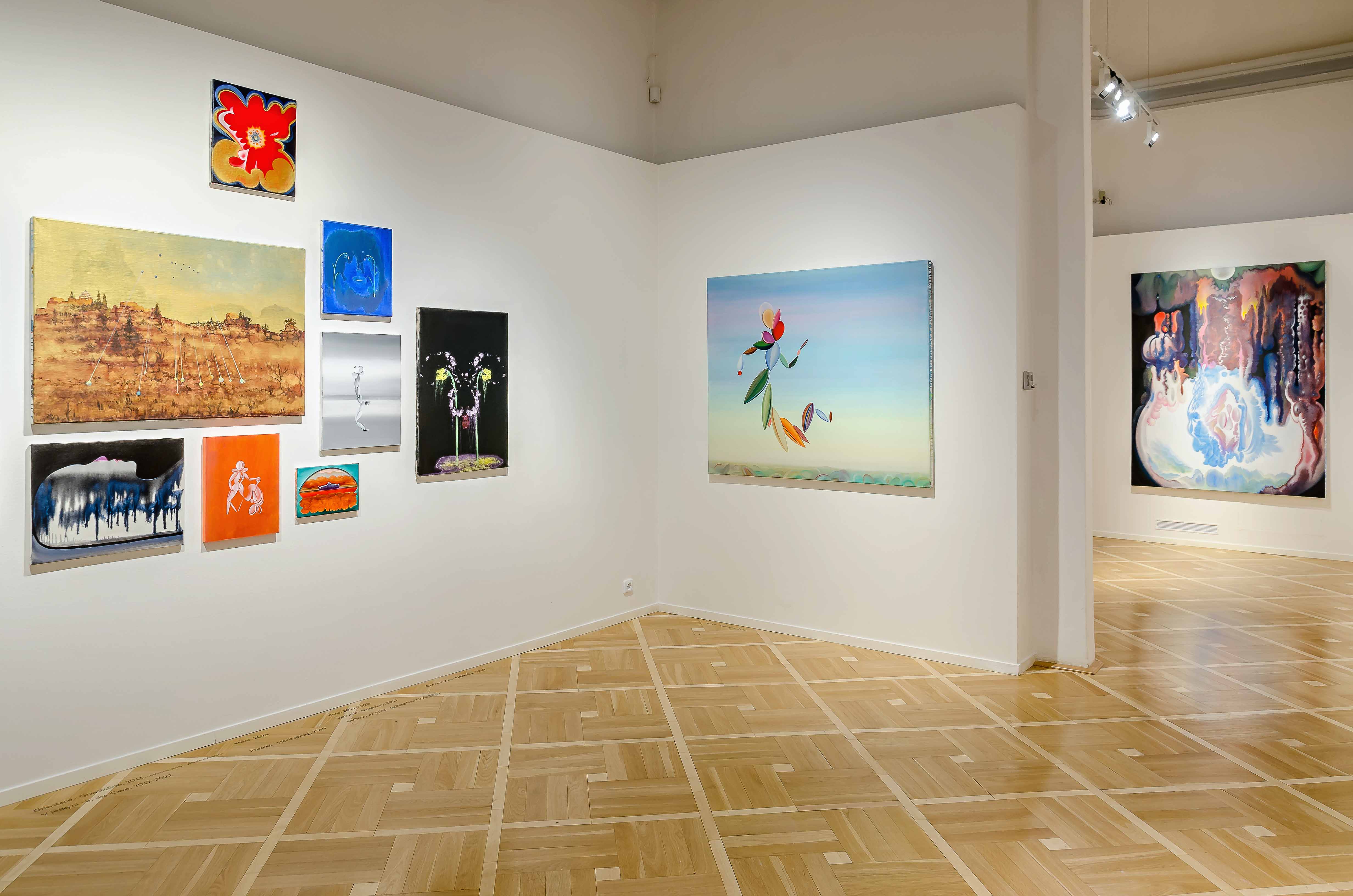
The work of Veronika Holcová represents one of the most distinctive painterly expressions in contemporary art. Since the 1990s, she has been creating paintings that appear delicate and harmonious at first glance, yet conceal a powerful psychological tension. She projects into them her own experiences, memories, visions, subconscious archetypal content, nightmares, and moments of daydreaming. For her, a painting is not a finished form, but a living organism to which she returns: she repaints it, layers it, and lets it mature. All of her paintings are, in a sense, her self-portraits. At the same time, however, they speak to the universal female experience – of the body, vulnerability, strength, desire, and fear.
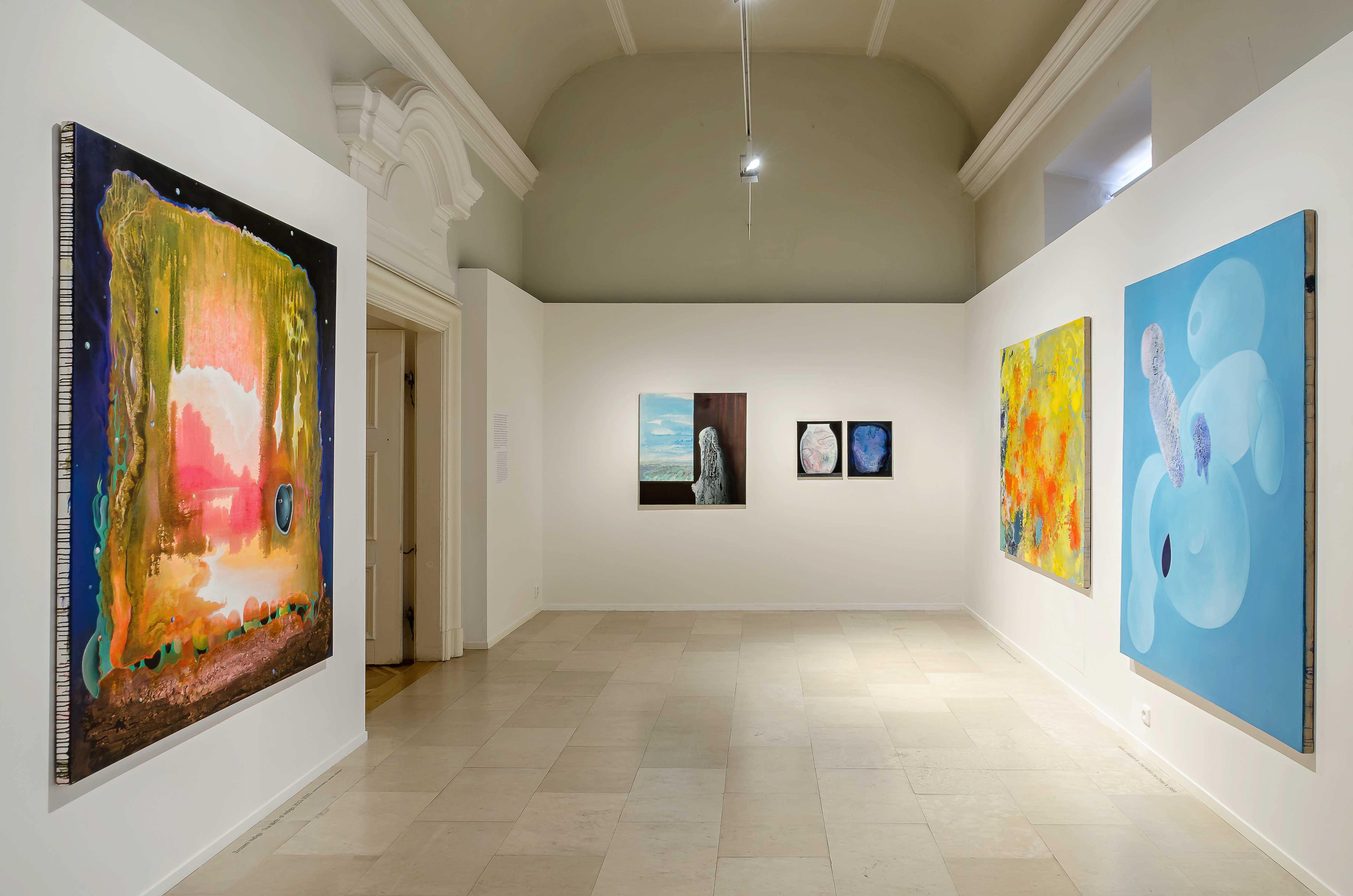
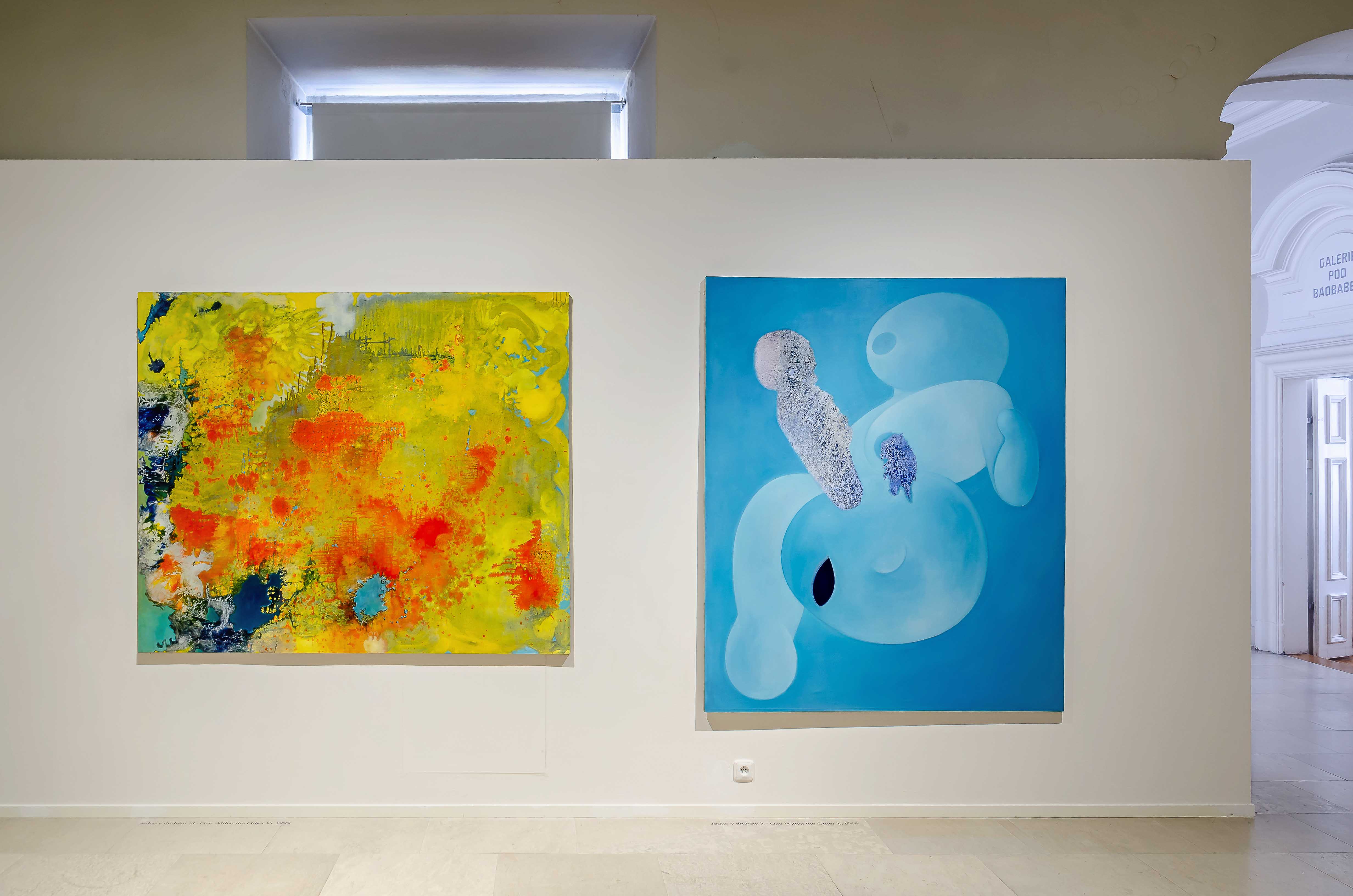
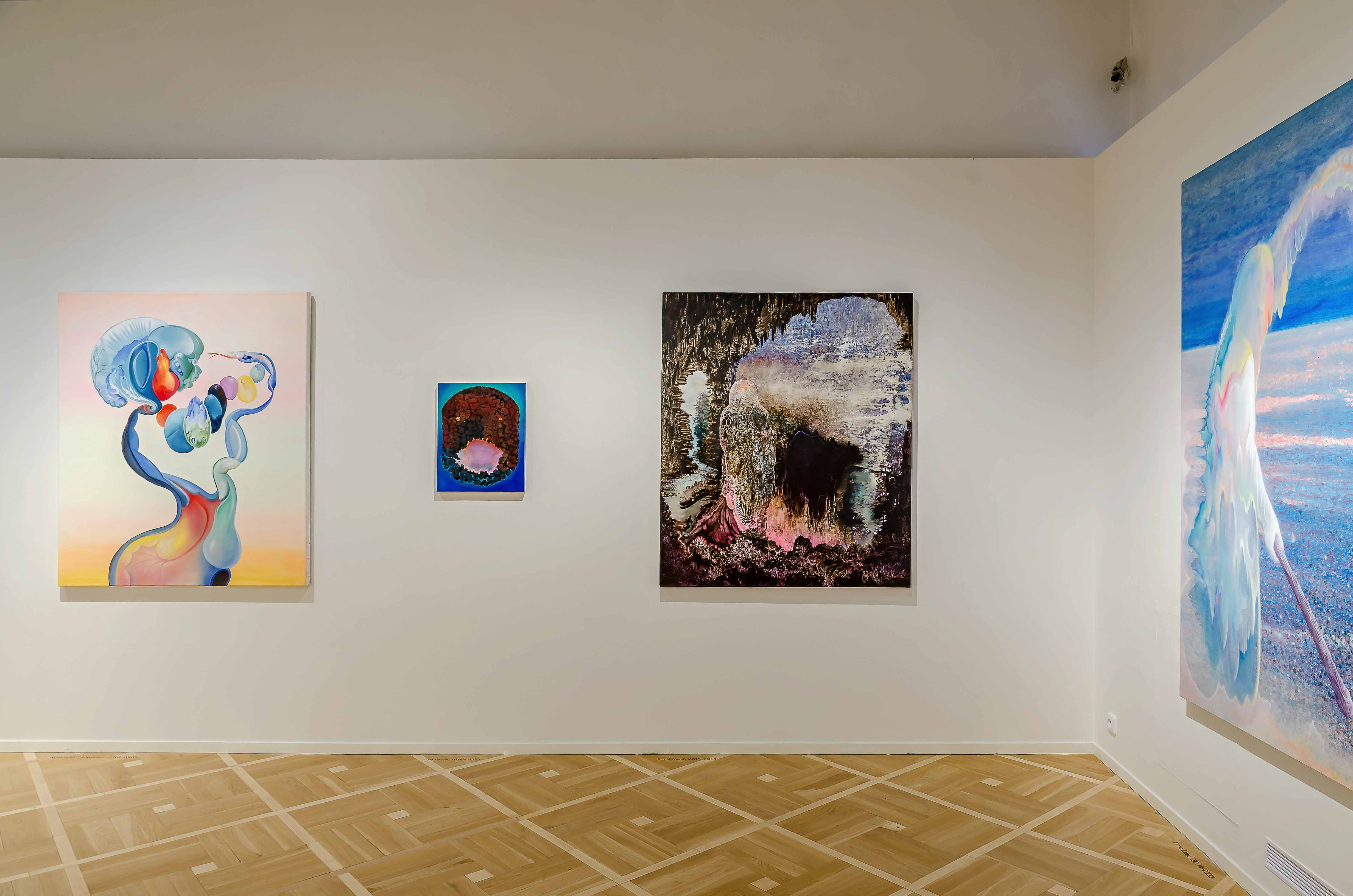
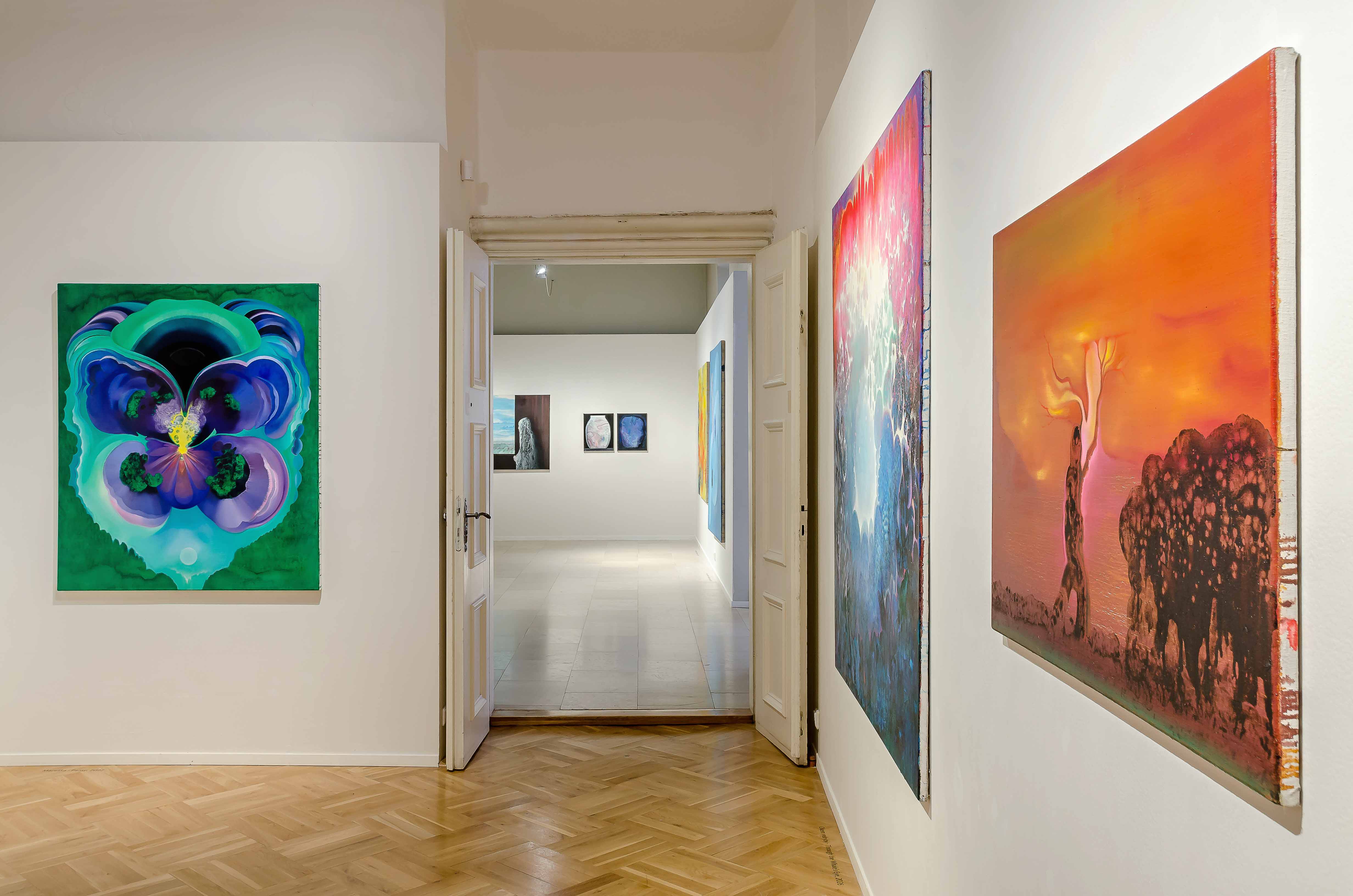
In 1999, Veronika Holcová graduated from the Academy of Fine Arts in Prague with a series of ten canvases titled One Within the Other. In them, she captured the period of her pregnancy and early motherhood. Each painting built upon the previous one; visual motifs flowed seamlessly, emerging from one another. At the same time, they already encompassed much of what remains characteristic of the artist today: spontaneous imagination, openness to chance, and a constant oscillation between recognizable figurative elements and abstract textures. The female body conceived as a cosmic vessel that gives birth to another world is also the subject of the recent painting The Birth of Indigo. It points to the cyclical nature of the painter’s work. Her daughter Julie, who once served as the inspiration for the theme of her thesis, is exhibiting in parallel two floors below. The circle is complete.
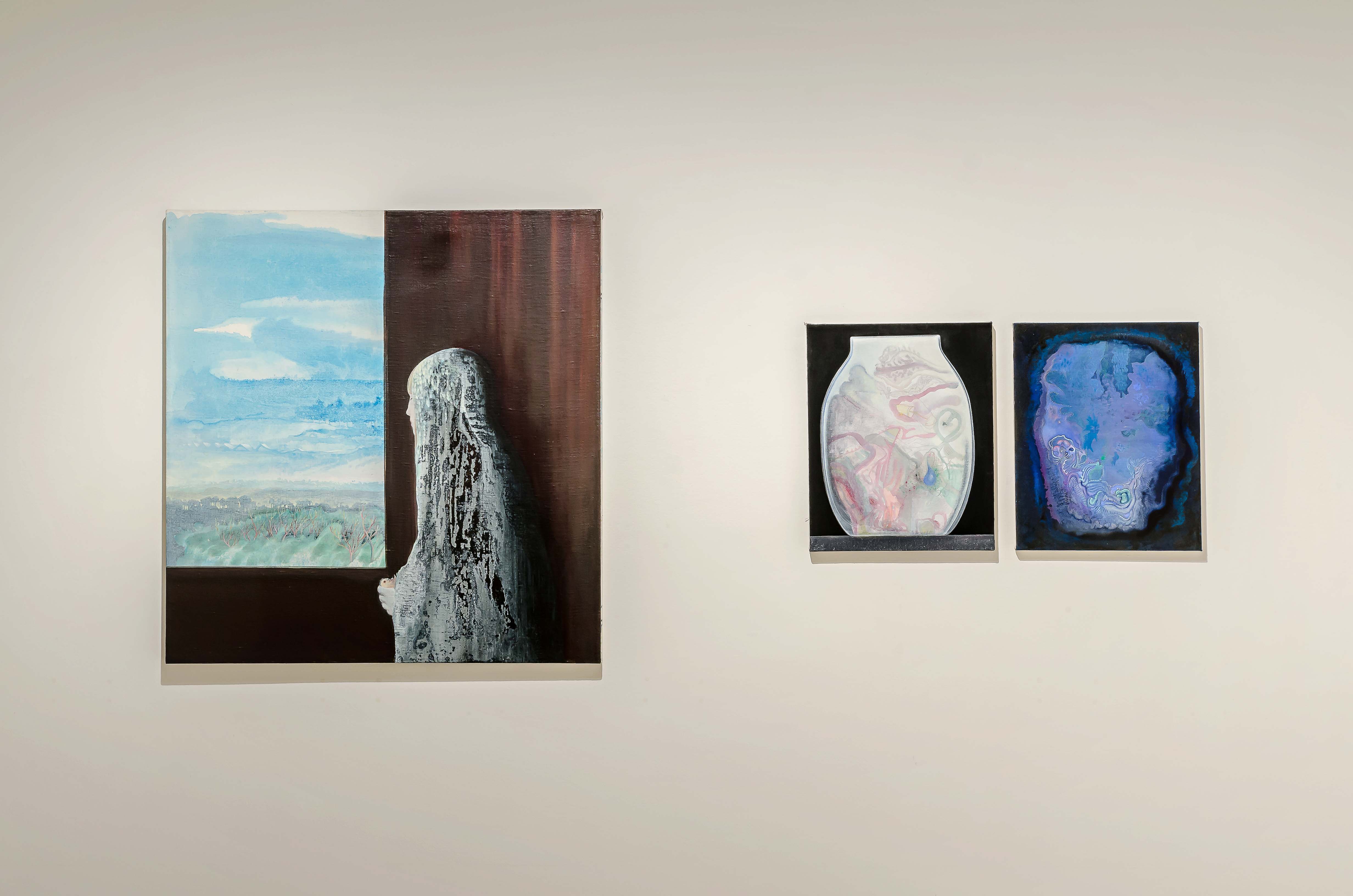
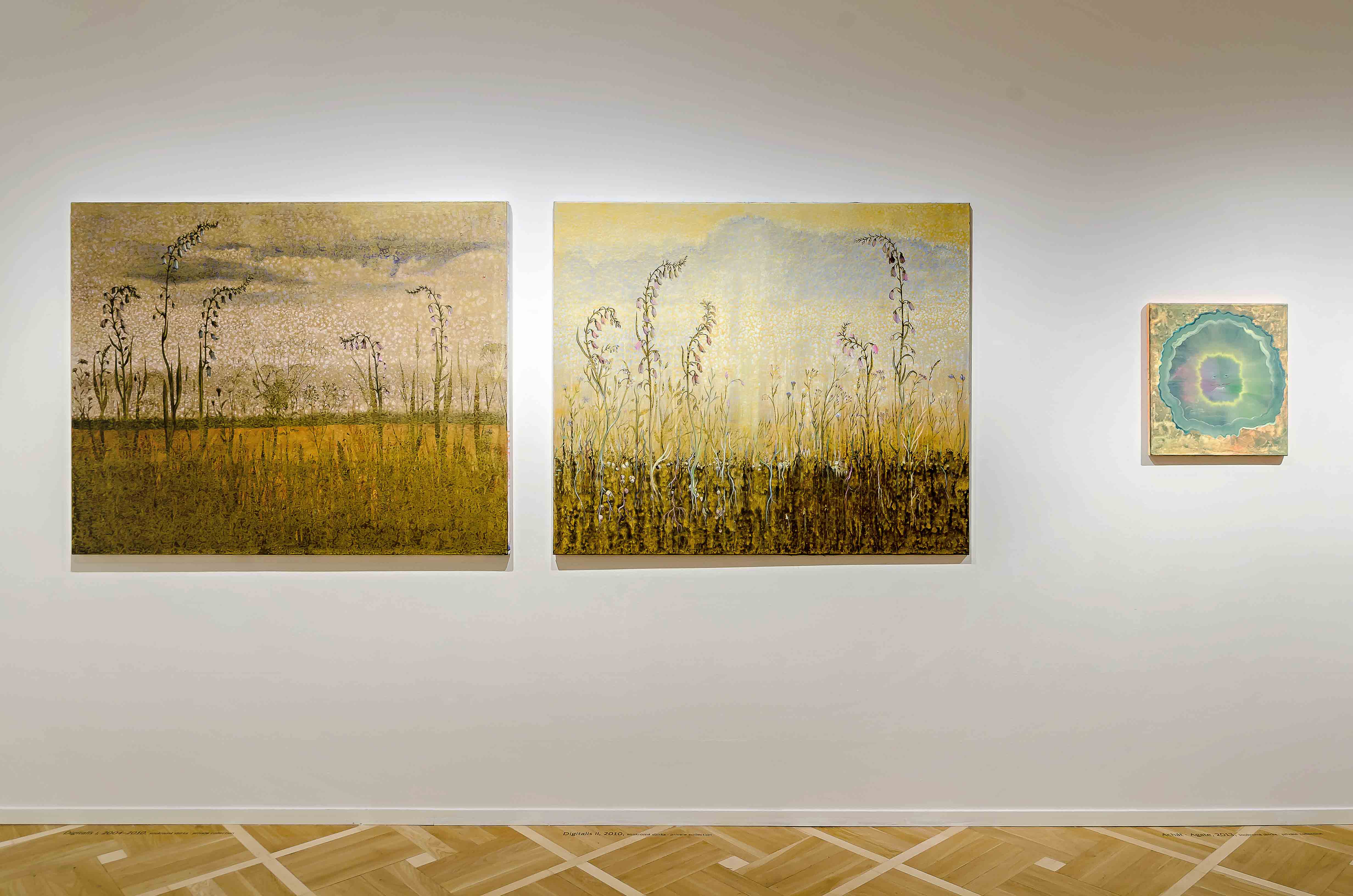
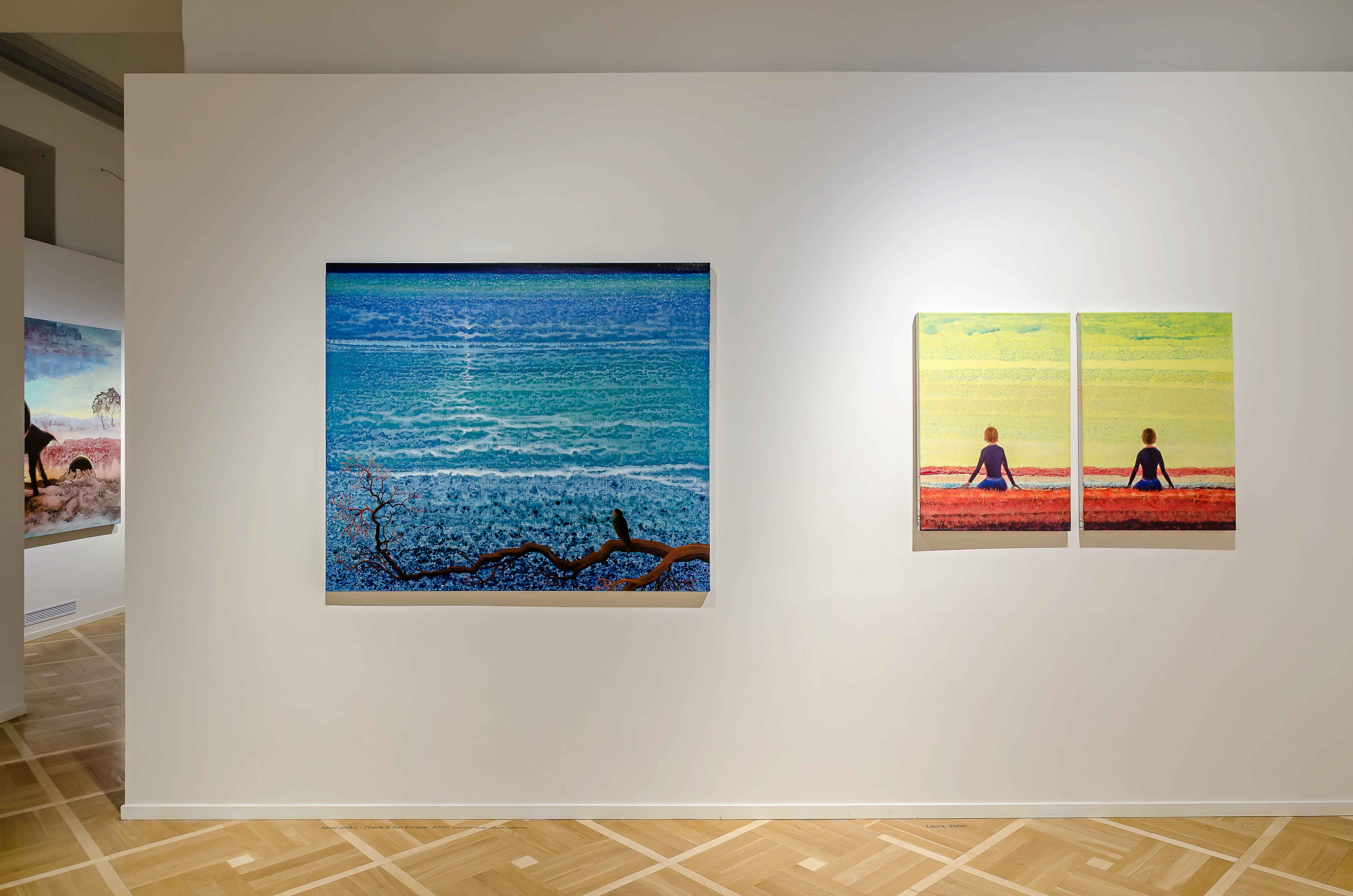
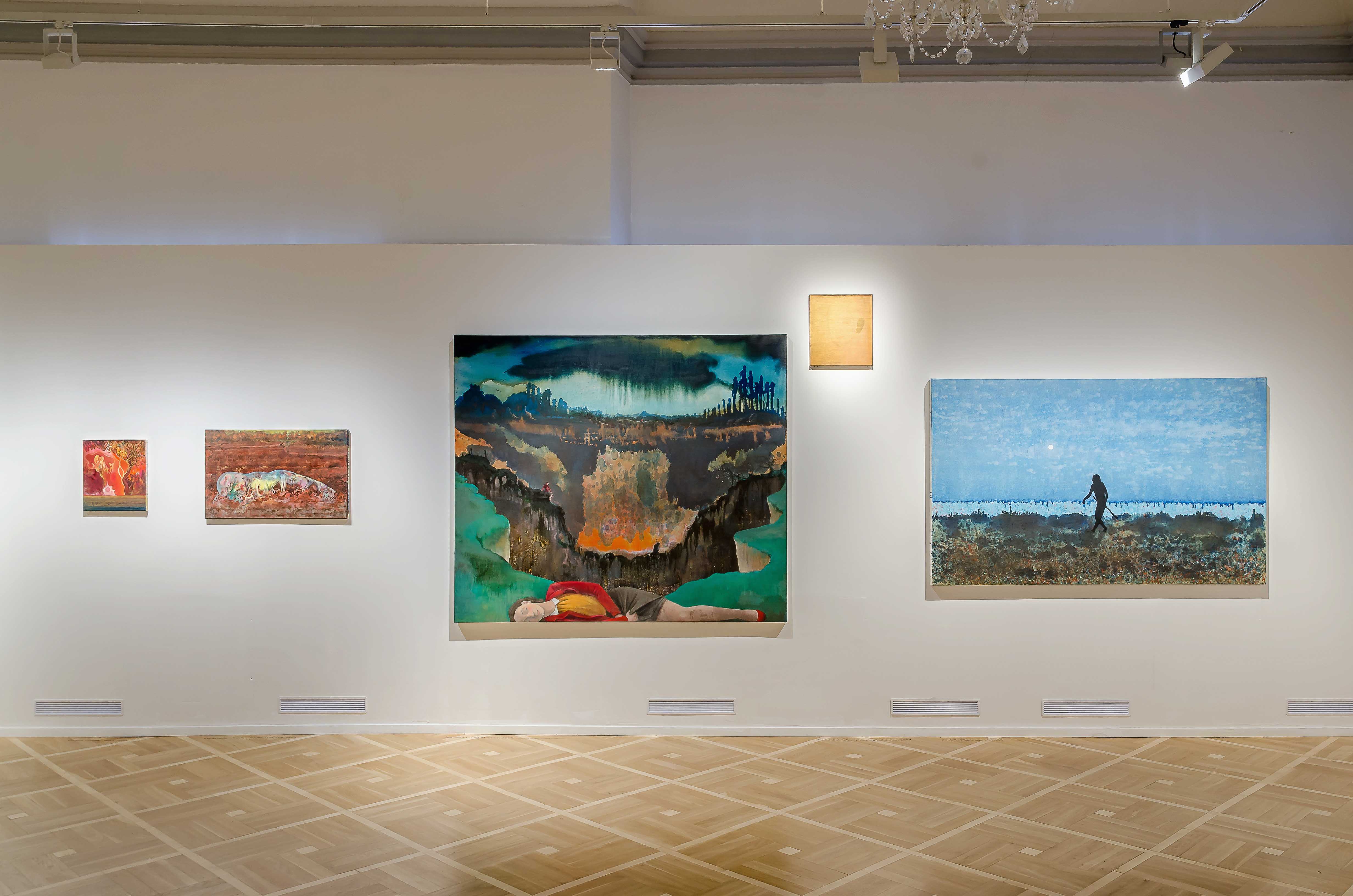
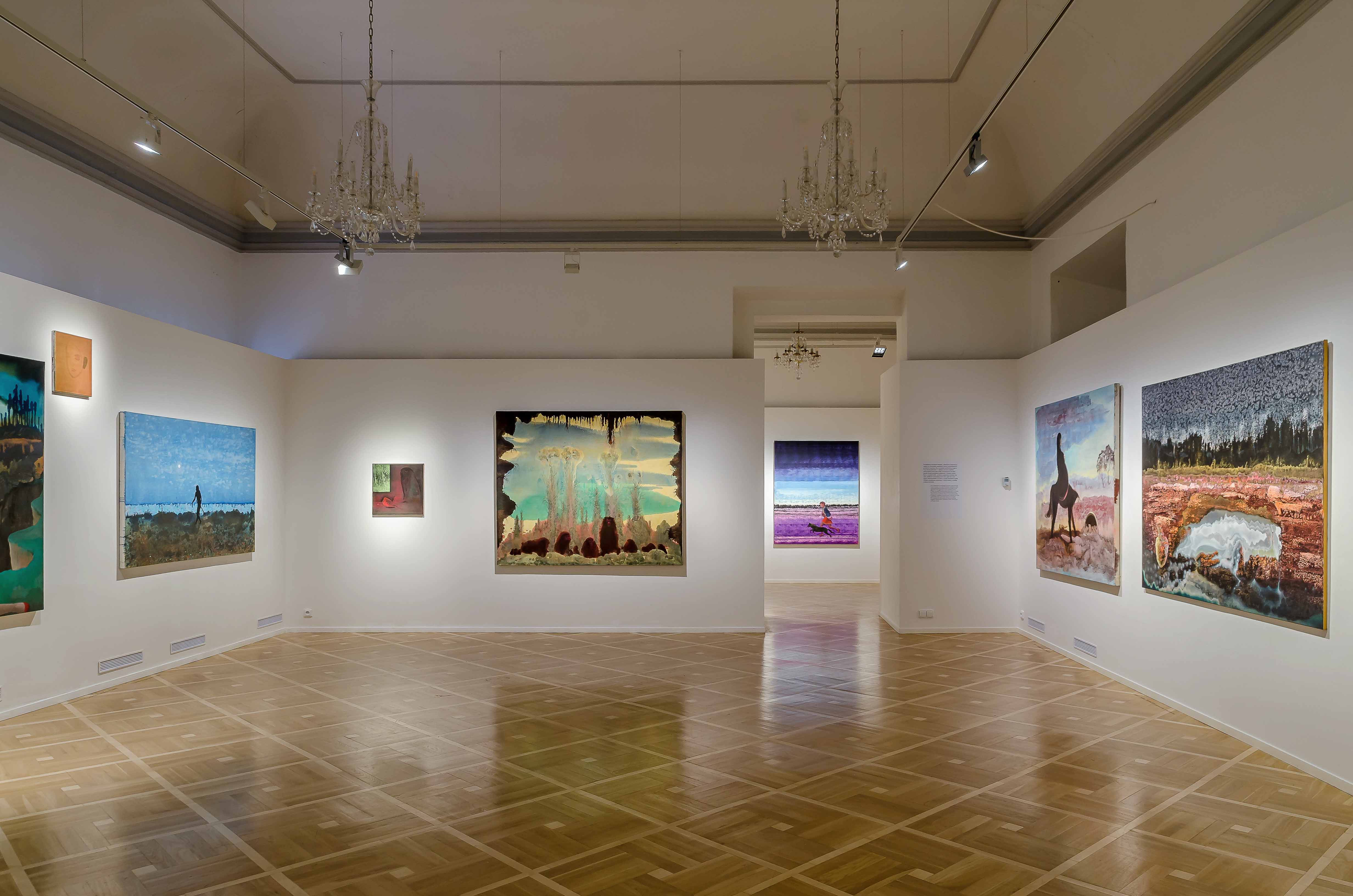
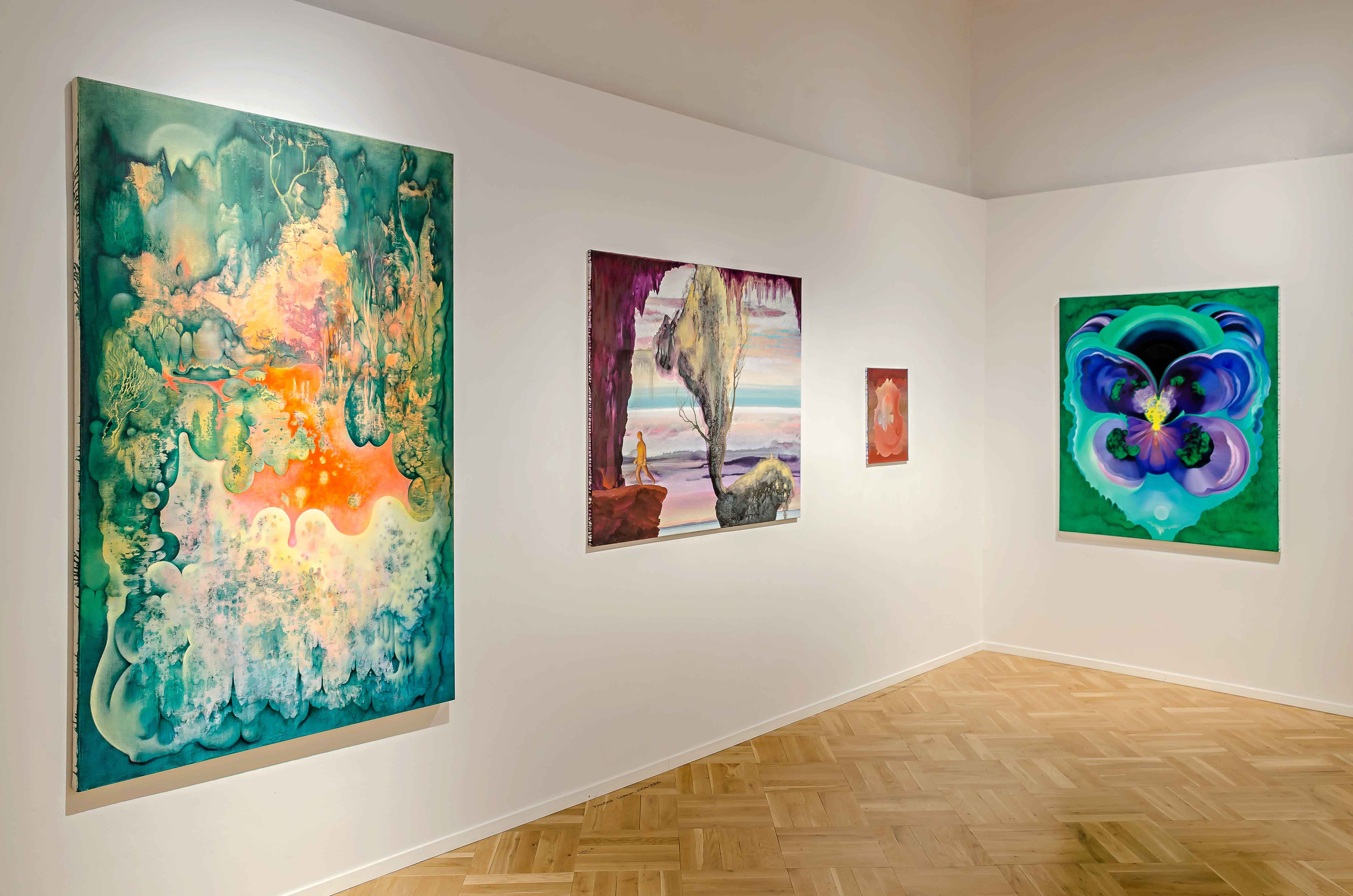
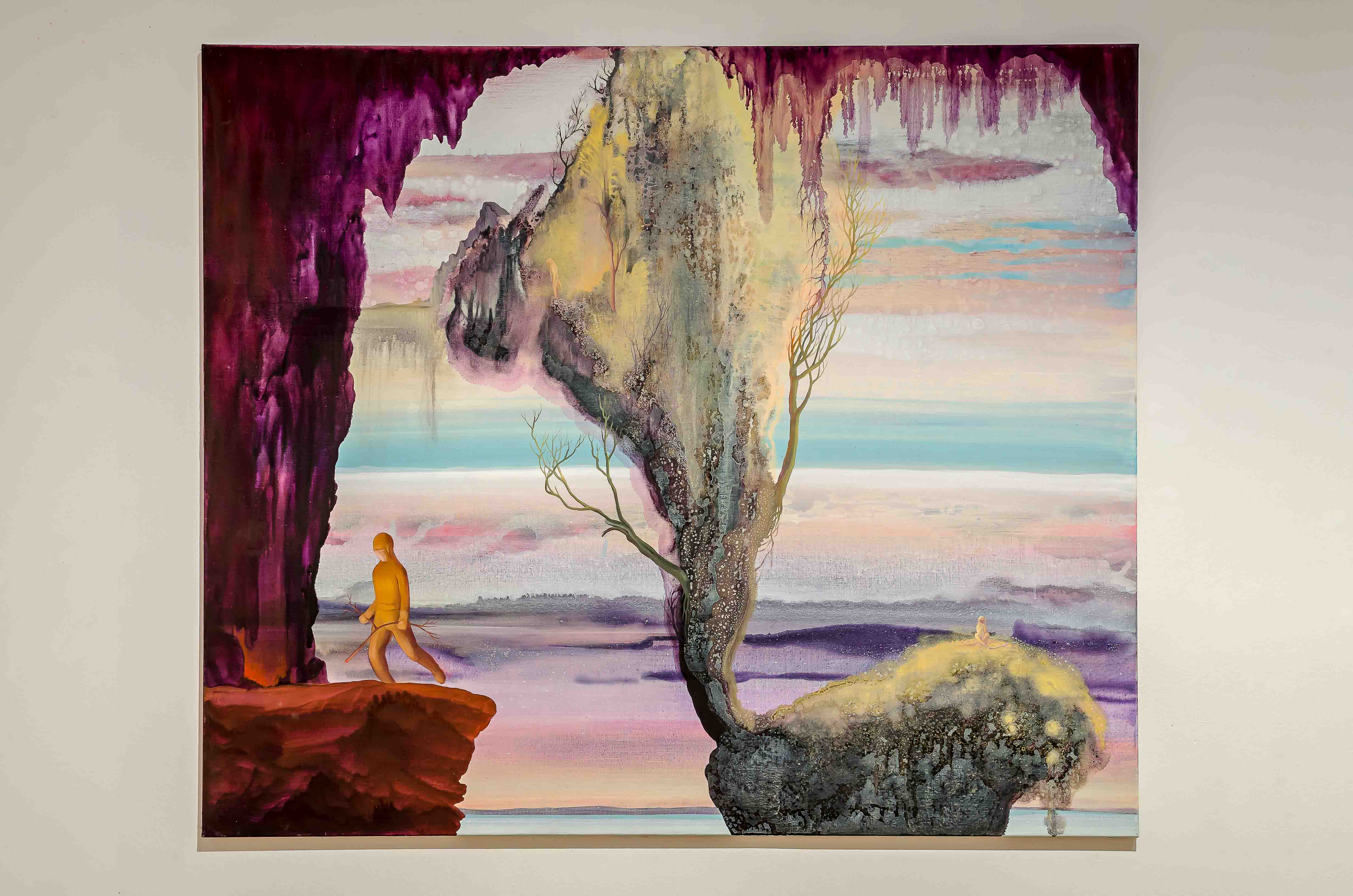
In the second half of the 2000s, the protagonist of the artist’s paintings became her alter ego – a girl walking through the landscape or gazing resignedly into her future. The vague background reflects inner states of mind: desire and anxiety, calm and determination. The withering foxgloves also evoke a similar atmosphere – poisonous plants that, in small quantities, are actually used to treat heart disease. These ambivalent feelings are expressed through the principles of duality and reflection, which also permeate her later work. In the painting Melancholy, she abandoned the figure and focused on its center, symbolizing the infinity of the universe, which transcends all that is human.
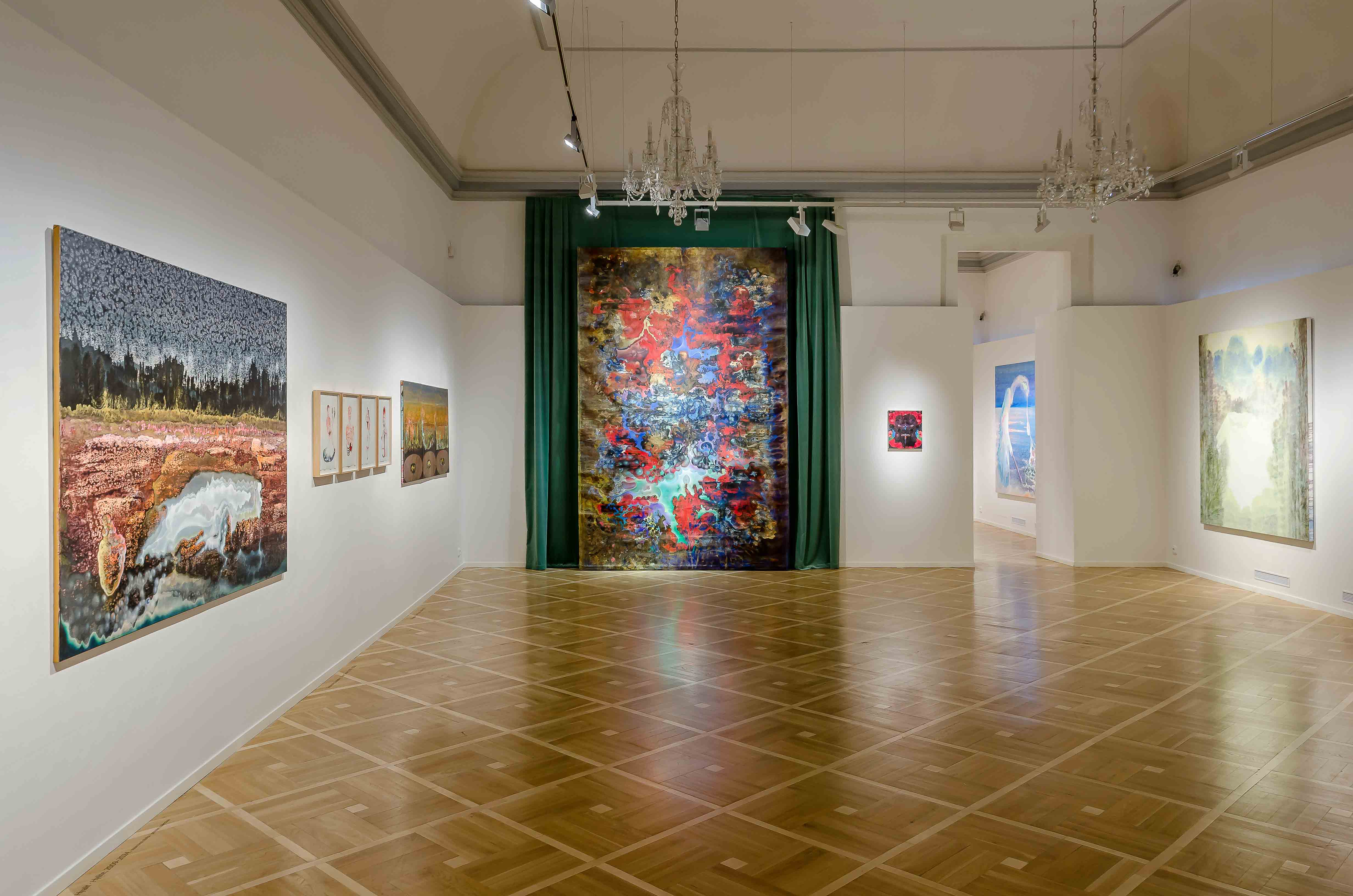
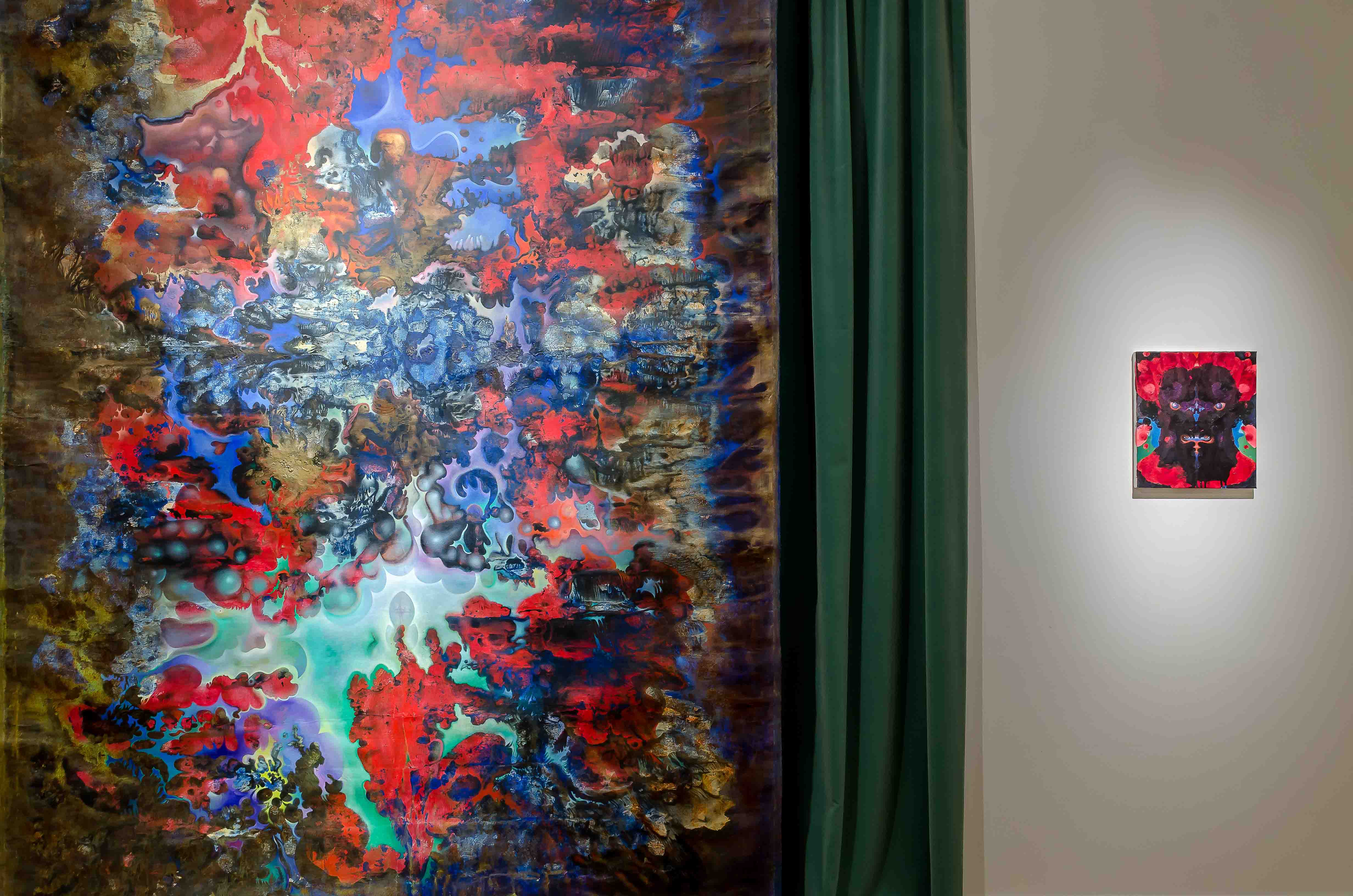
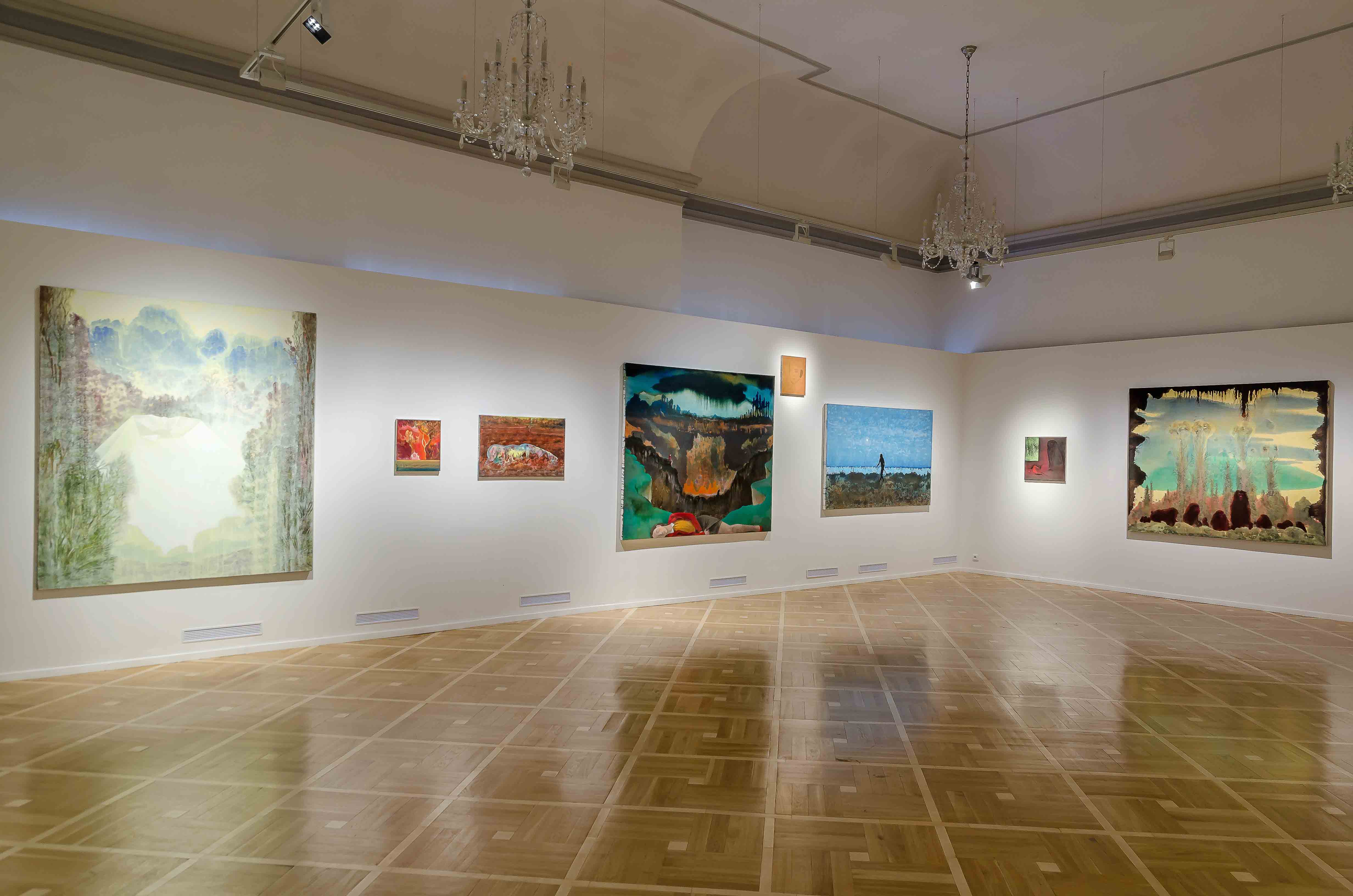
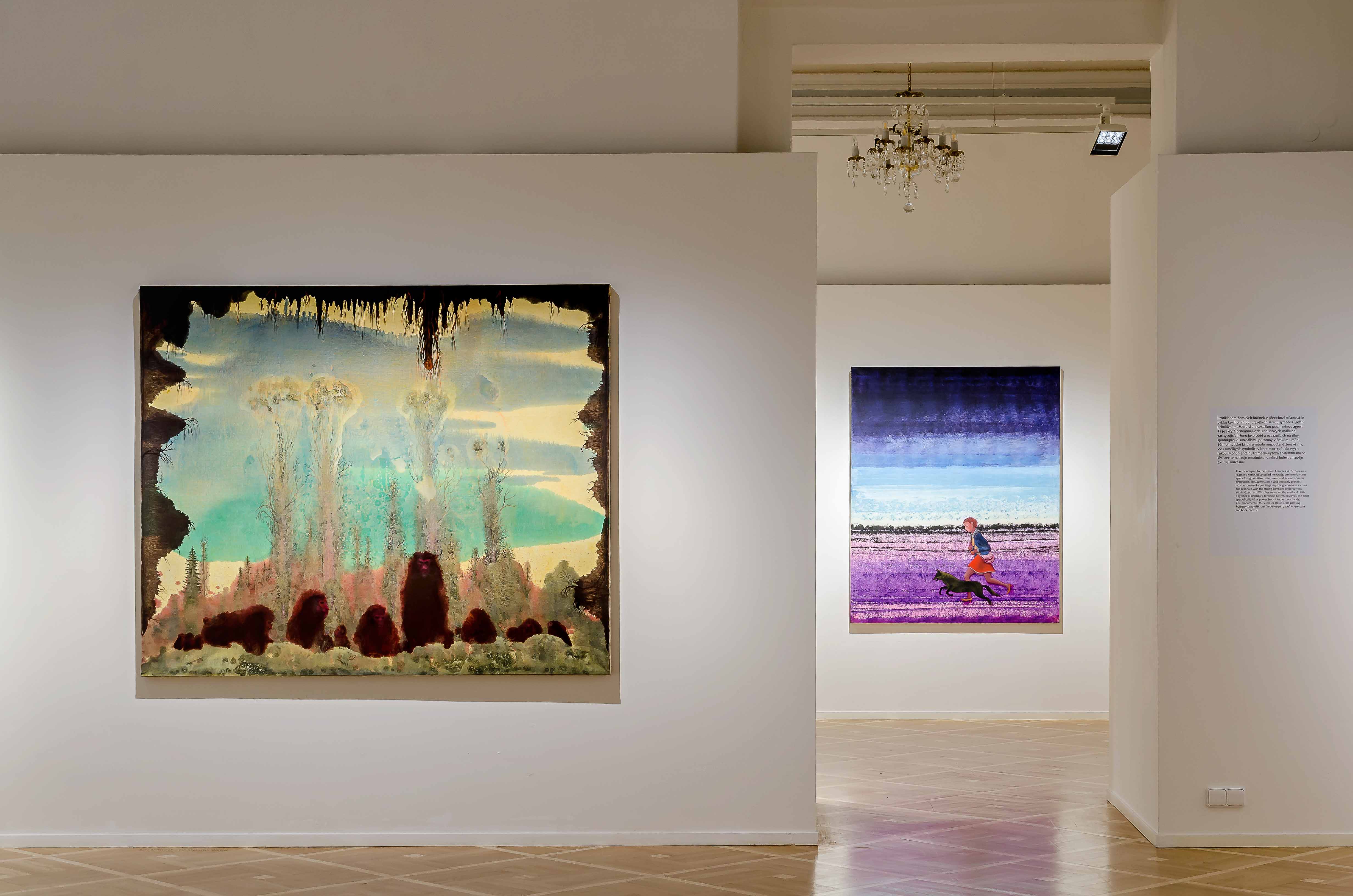
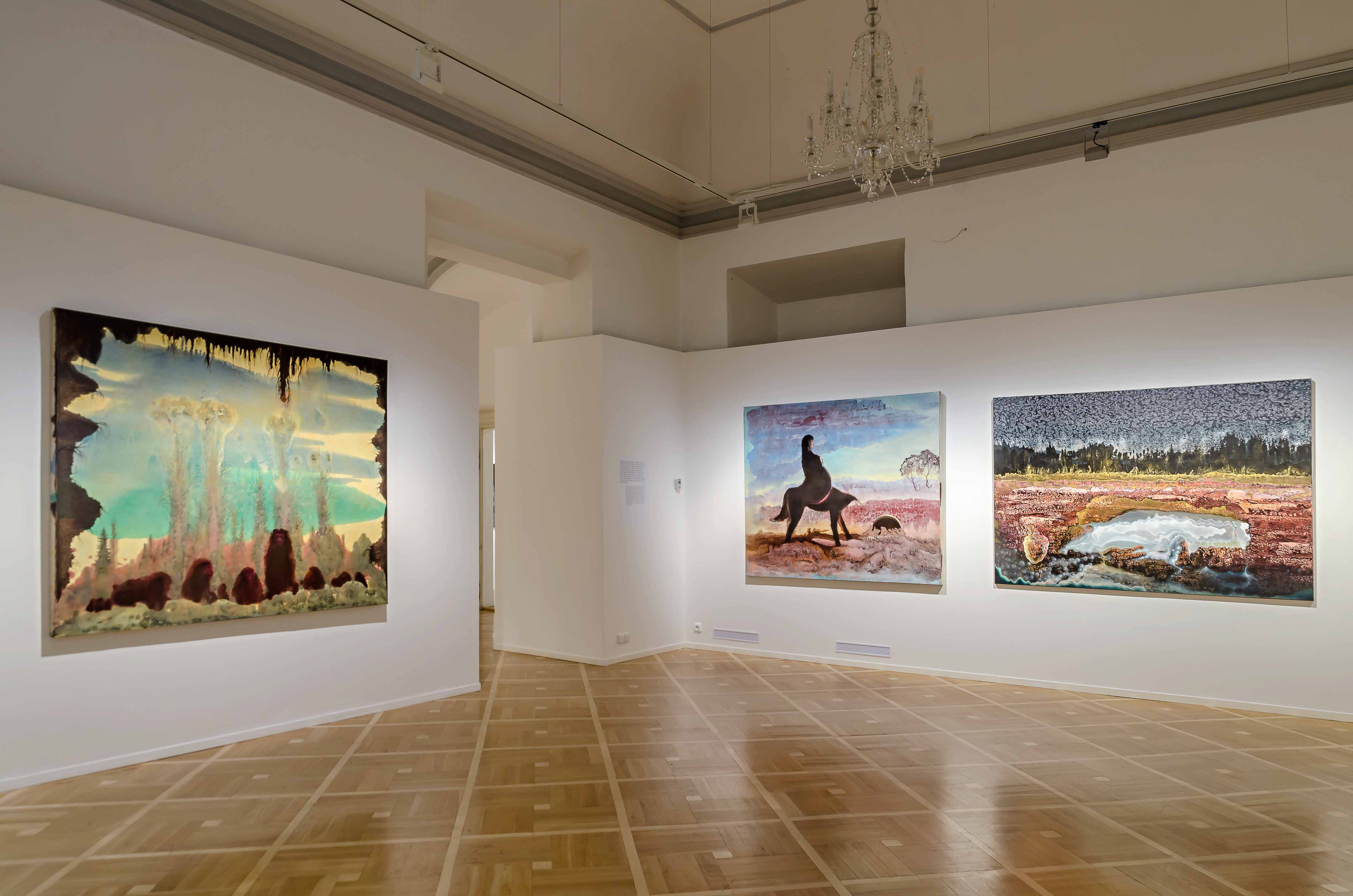
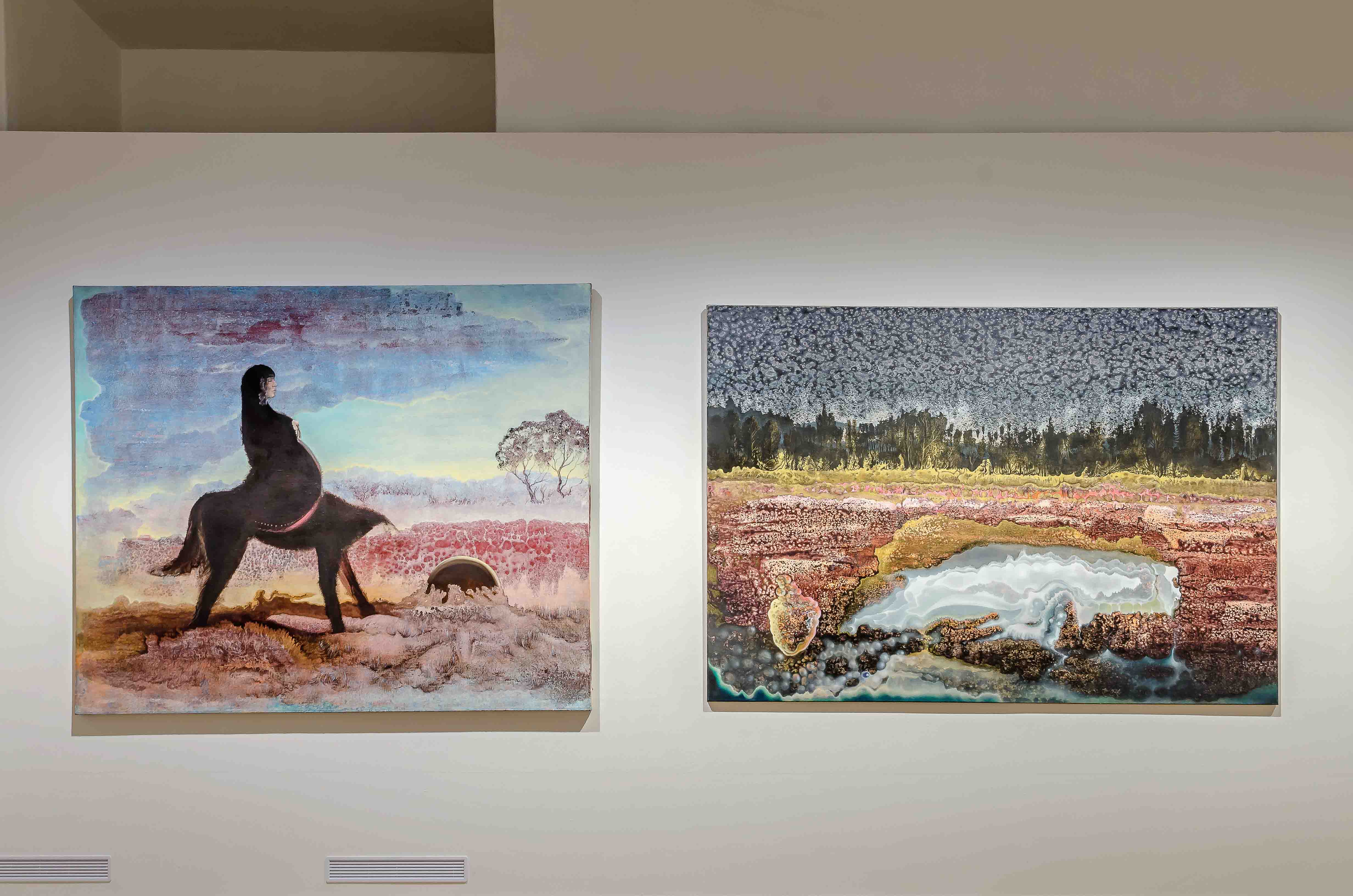
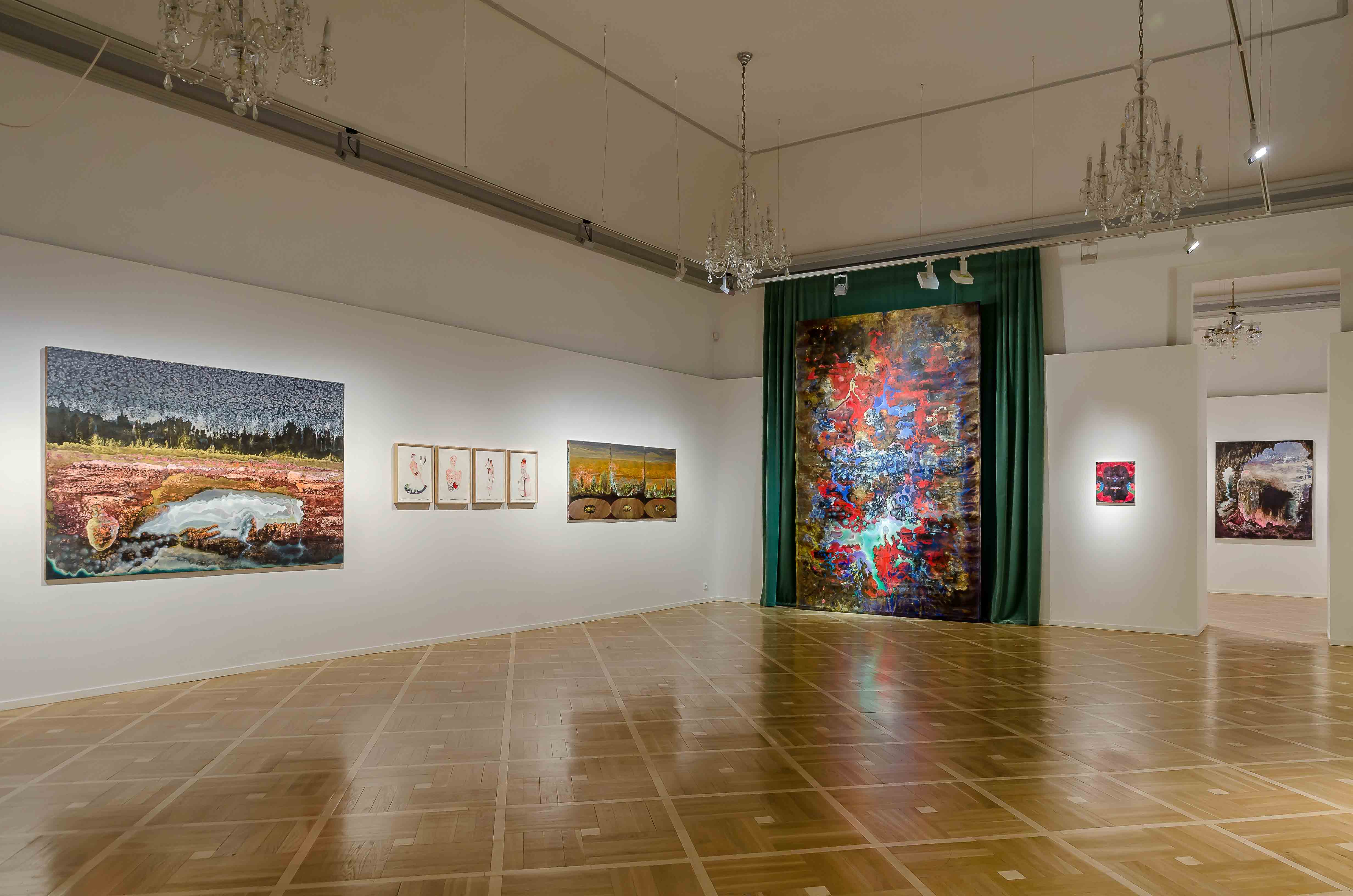
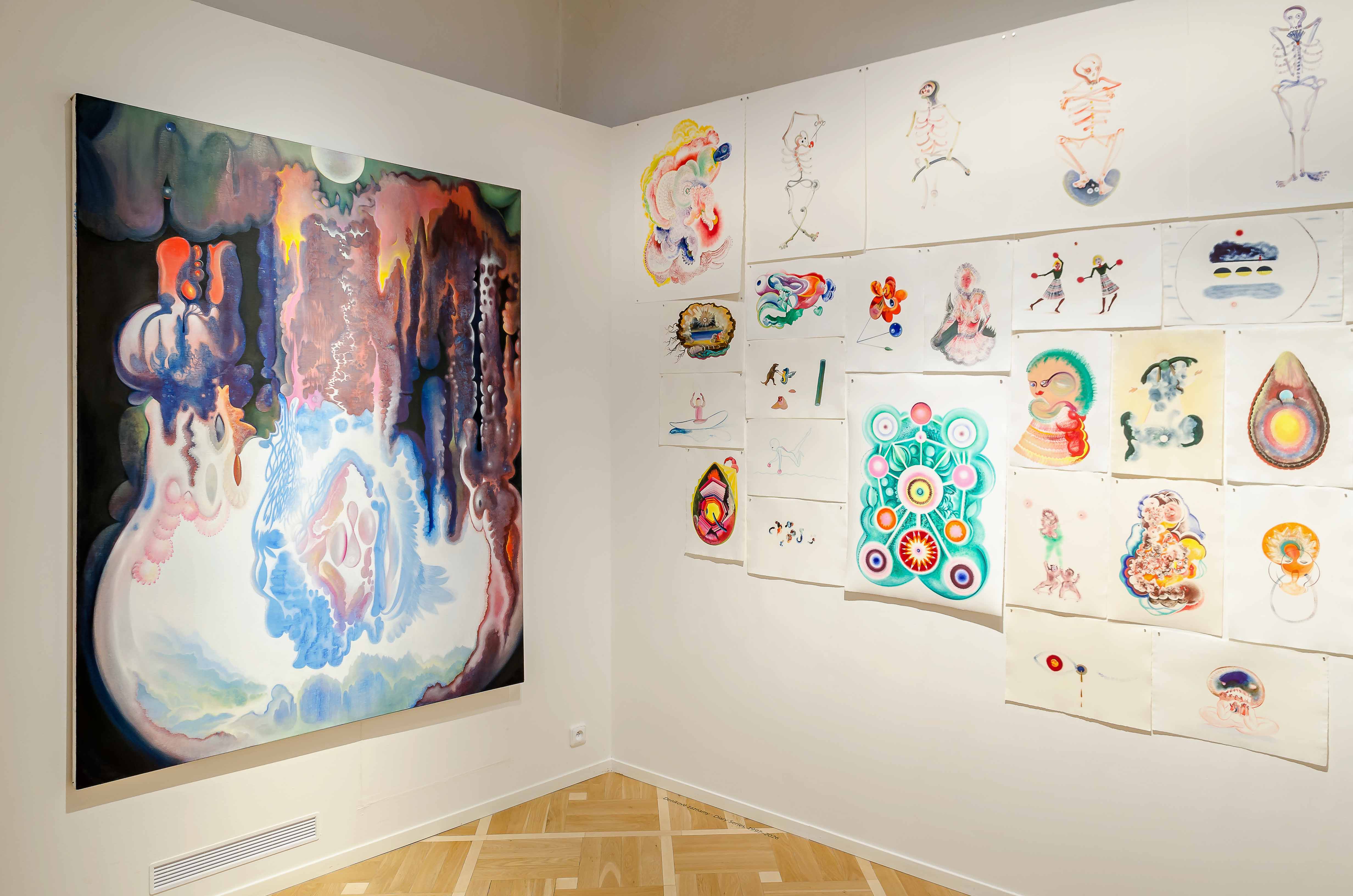
The counterpart to the female heroines in the previous room is a series of so-called hominids, prehistoric males symbolizing primitive male power and sexually driven aggression. This aggression is also implicitly present in other dreamlike paintings depicting women as victims and resonate with the strong Surrealist undercurrent within Czech art. With her series on the mythical Lilith, a symbol of unbridled feminine power, however, the artist symbolically takes power back into her own hands. The monumental, three-meter-tall abstract painting Purgatory explores the “in-between space” where pain and hope coexist.
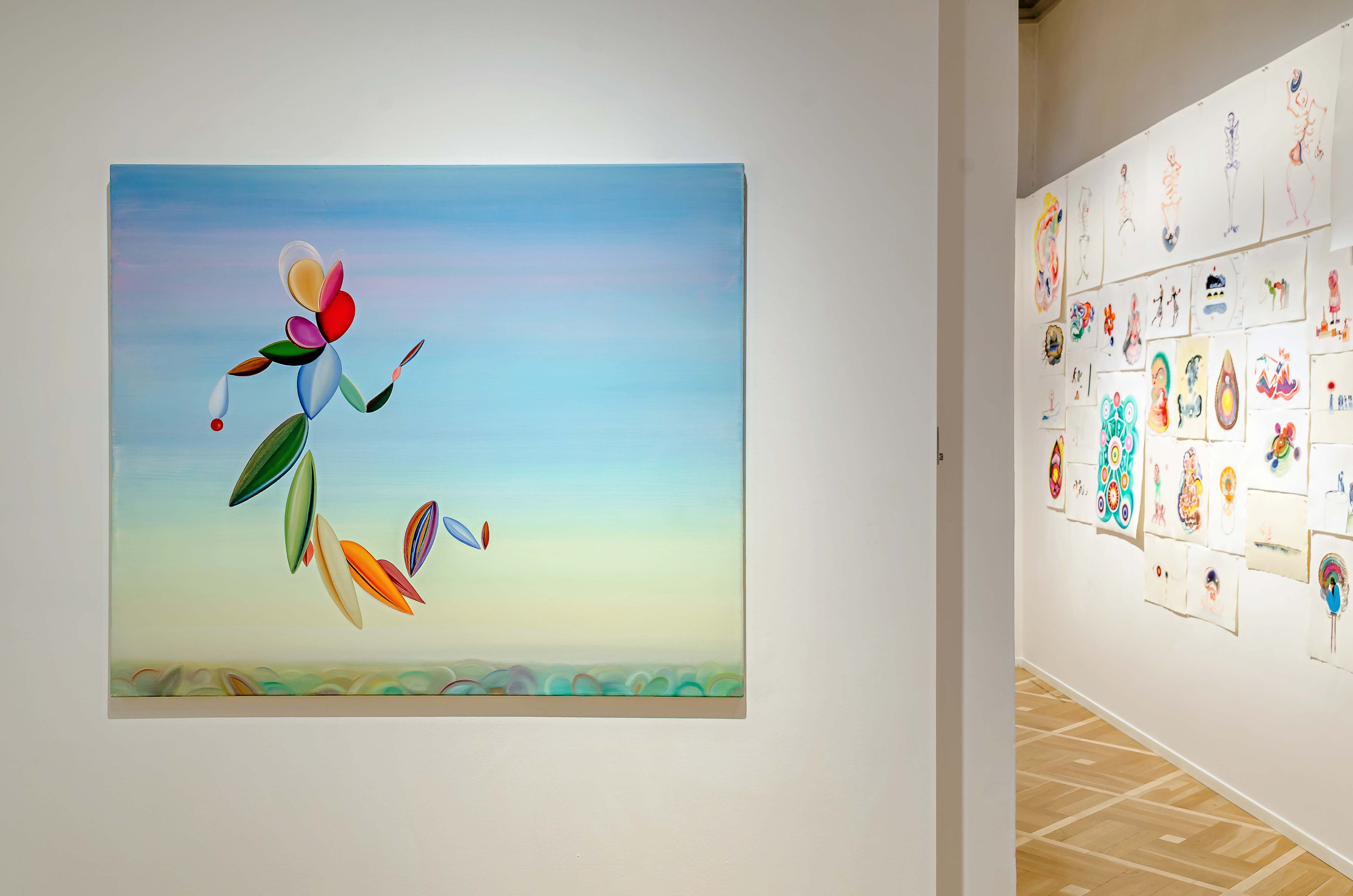
The years 2016–2019, when she was living in Canada, were an intense and inspiring period for the artist: she began creating geometric figures, but was also inspired by the vast North American landscape. Upon her return, during the COVID-19 pandemic, she decided to undertake a major revision of her paintings. She did not destroy the ones she rejected, but began to intervene in them and modify them so that they corresponded to her current inner space. Thus, for example, one of the hominids is hidden in the painting Time Lord. For her, repainting is an act of emancipation in which she claims the right to reshape her own history, refuses to be defined by an older version of herself, and transforms the painting into a living organism that can grow alongside her.
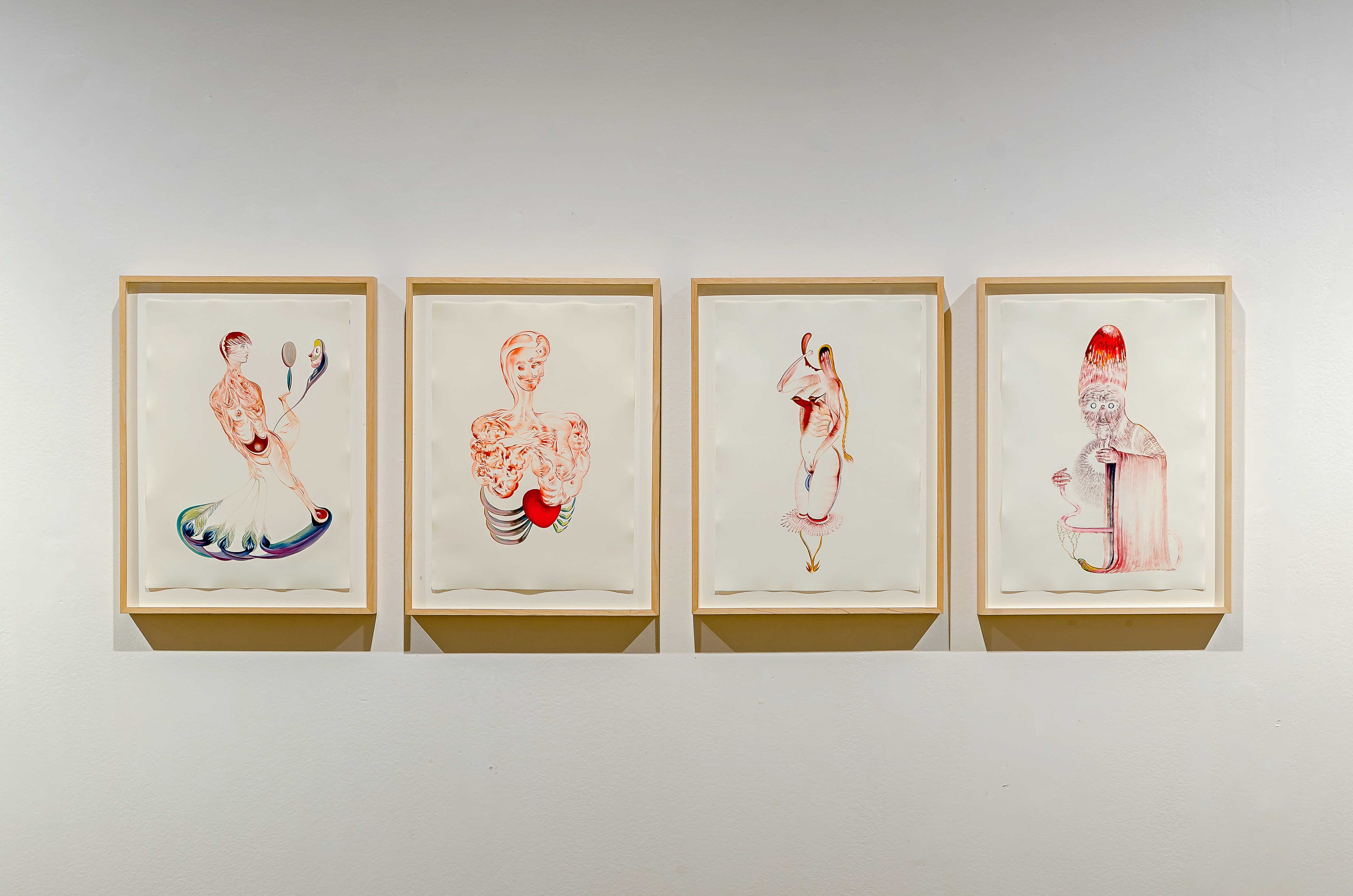
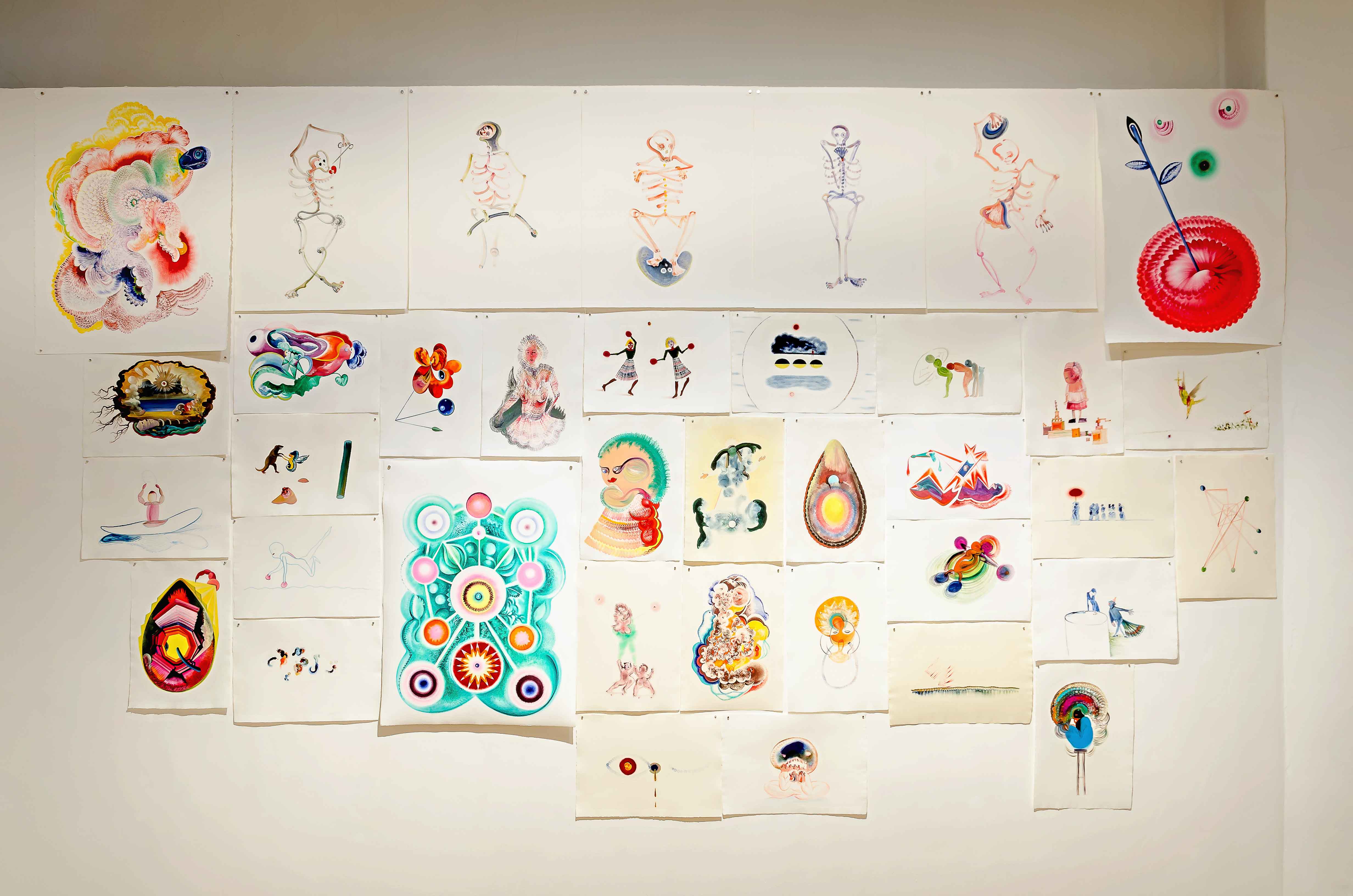
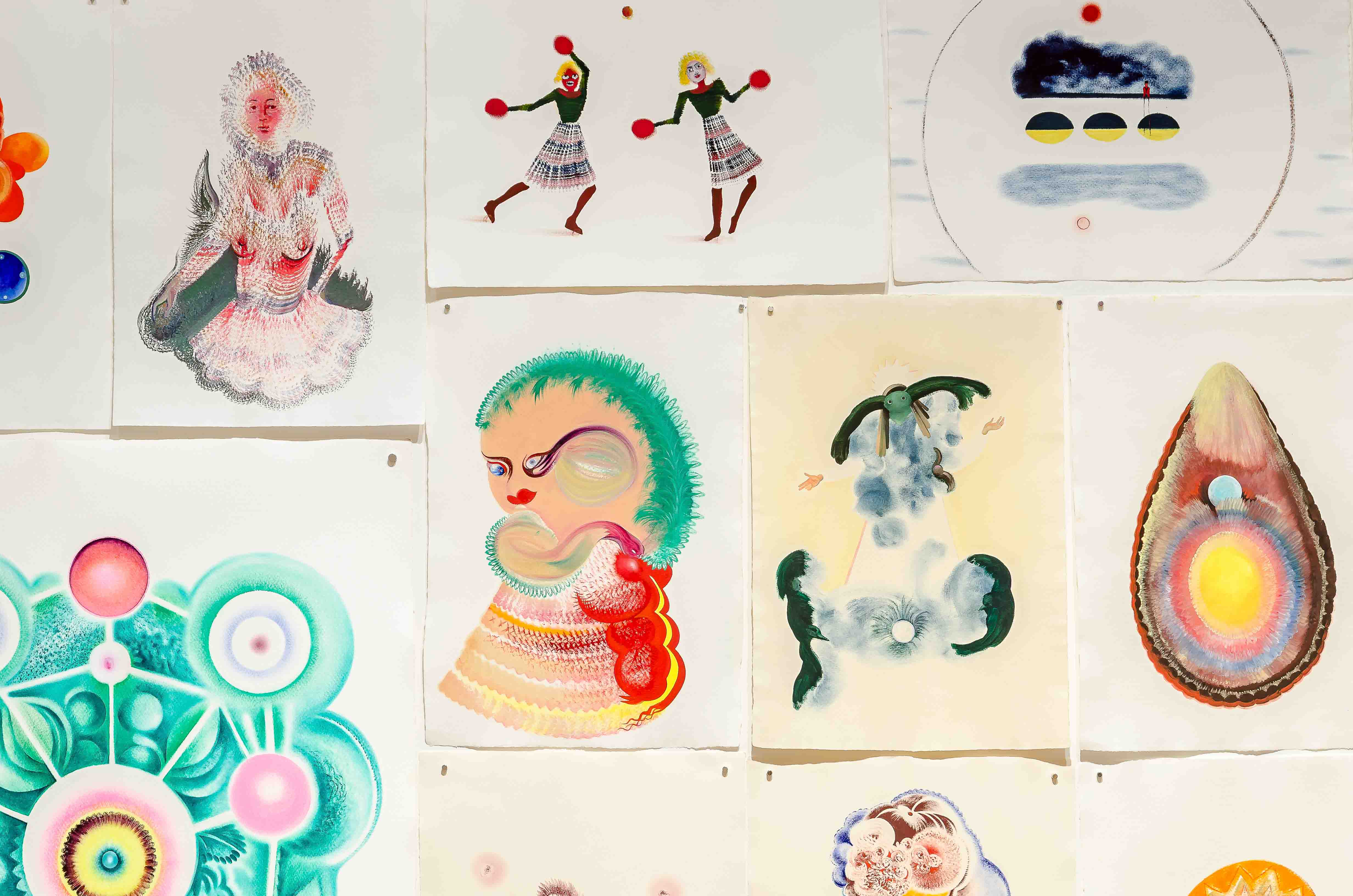
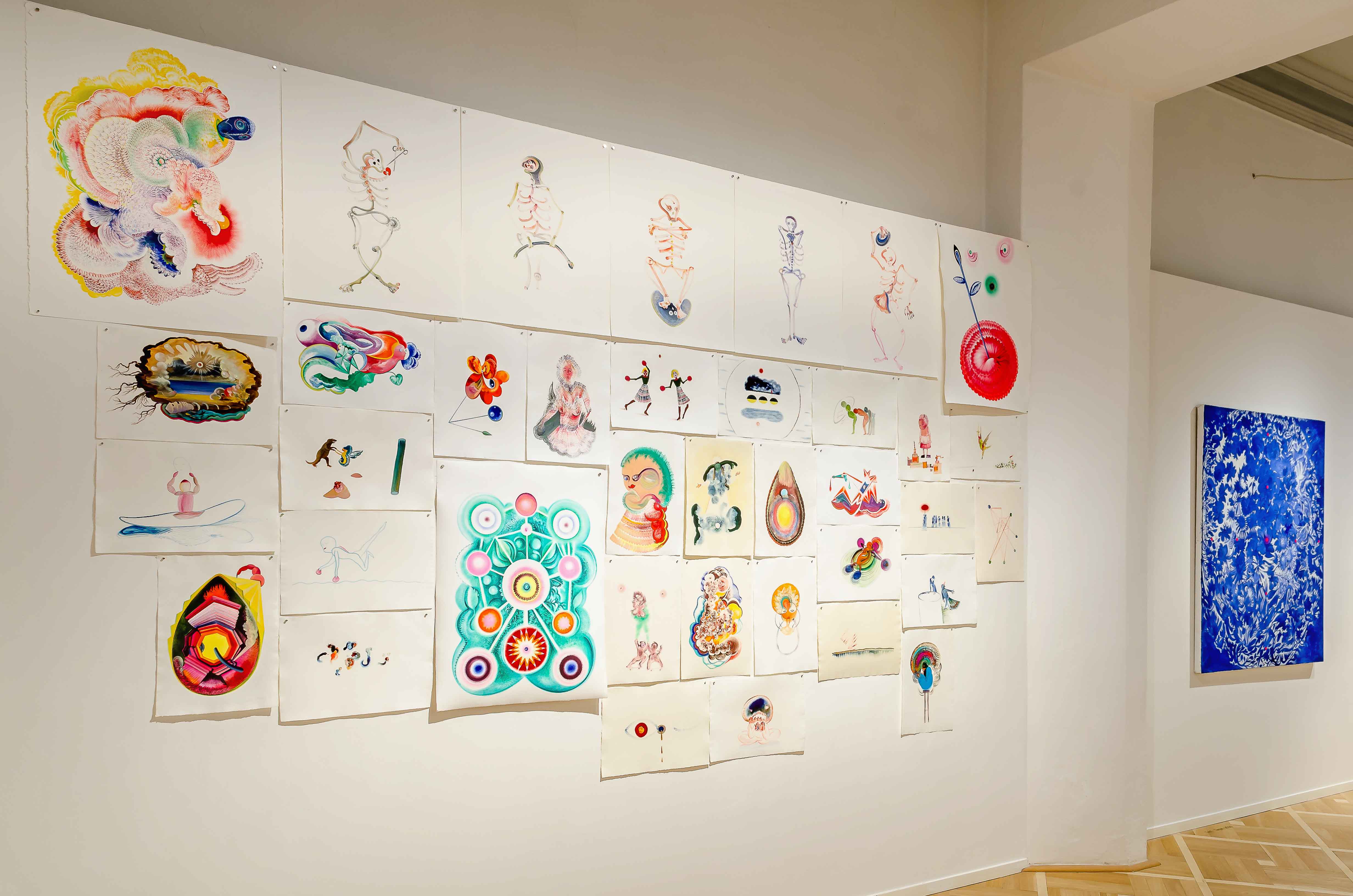
Works on paper form a parallel and equally significant strand in her artistic practice. These are not sketches for paintings, but dynamic chains of associations that reflect a very wide range of human emotions. The artist perceives them as “diary entries,” even though they do not serve to describe everyday events. Rather, they function as a seismograph of her current state of mind. In them, she employs techniques akin to Surrealist automatism or the mediumistic drawing known from Art Brut. The process of their creation, based on a free associative play, is profoundly liberating for her. It is an almost therapeutic ritual through which the artist literally 'clears out' the private contents of her unconscious, bringing to the surface of the paper what had until that moment remained hidden from her.
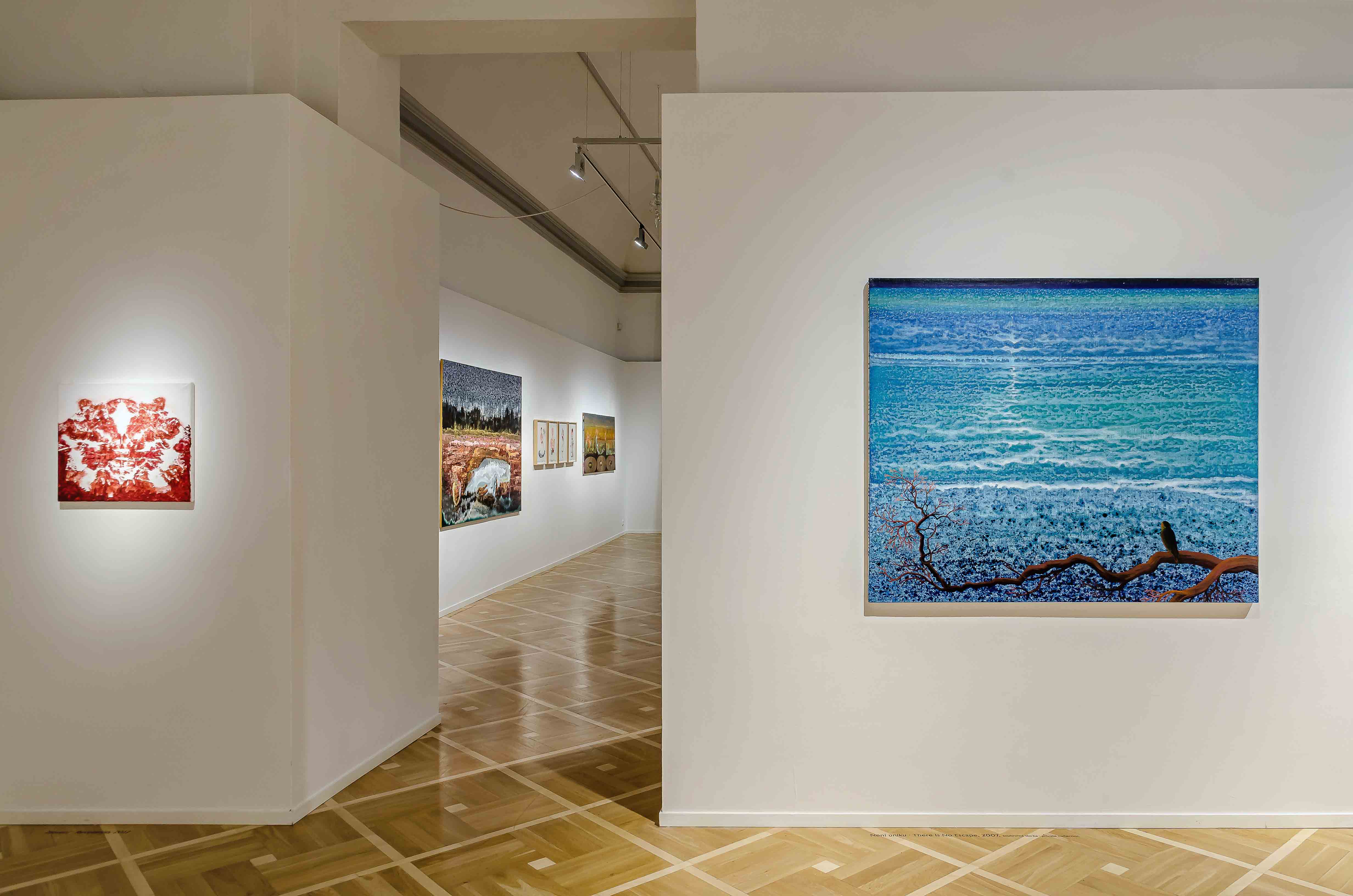
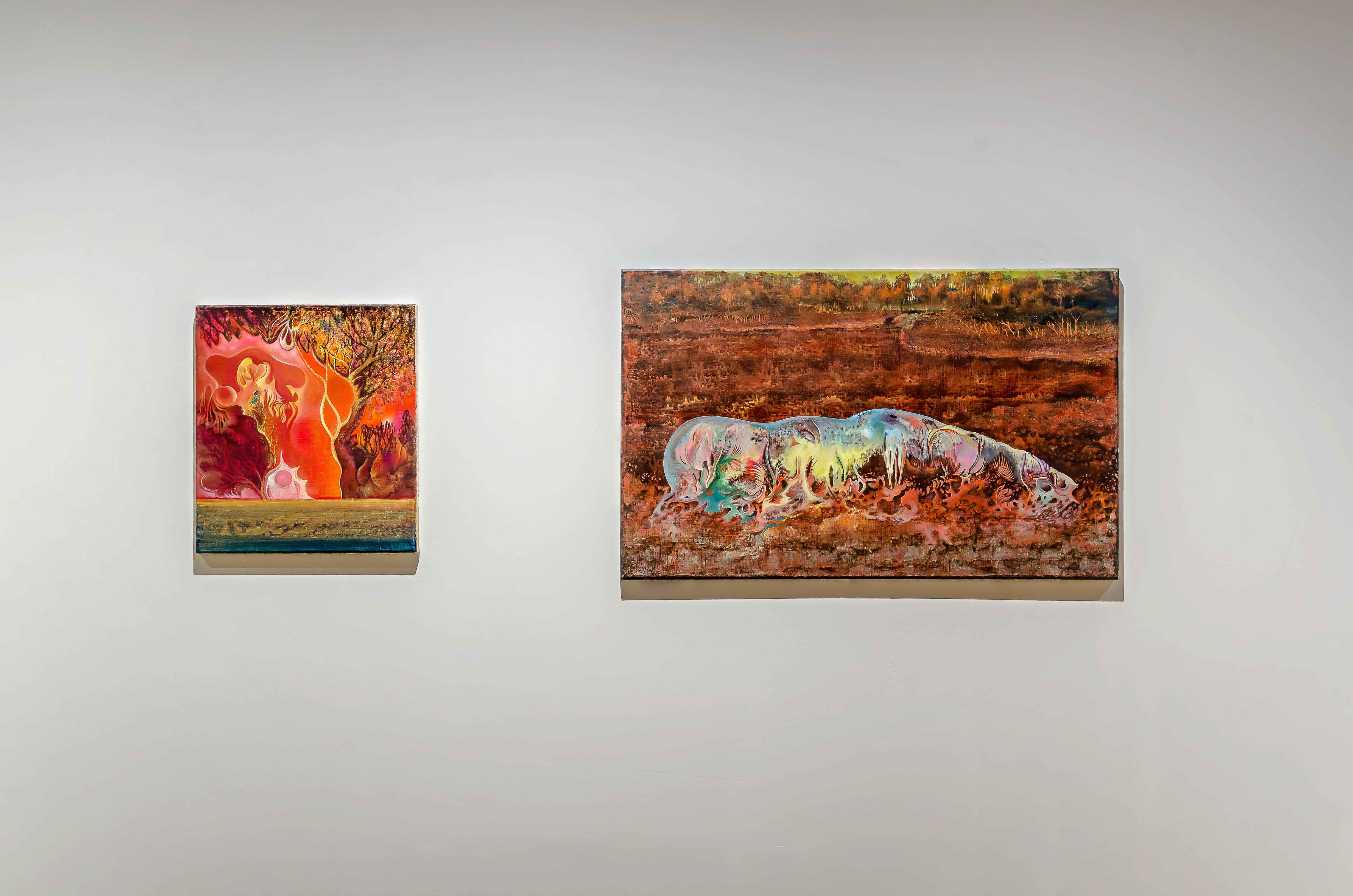
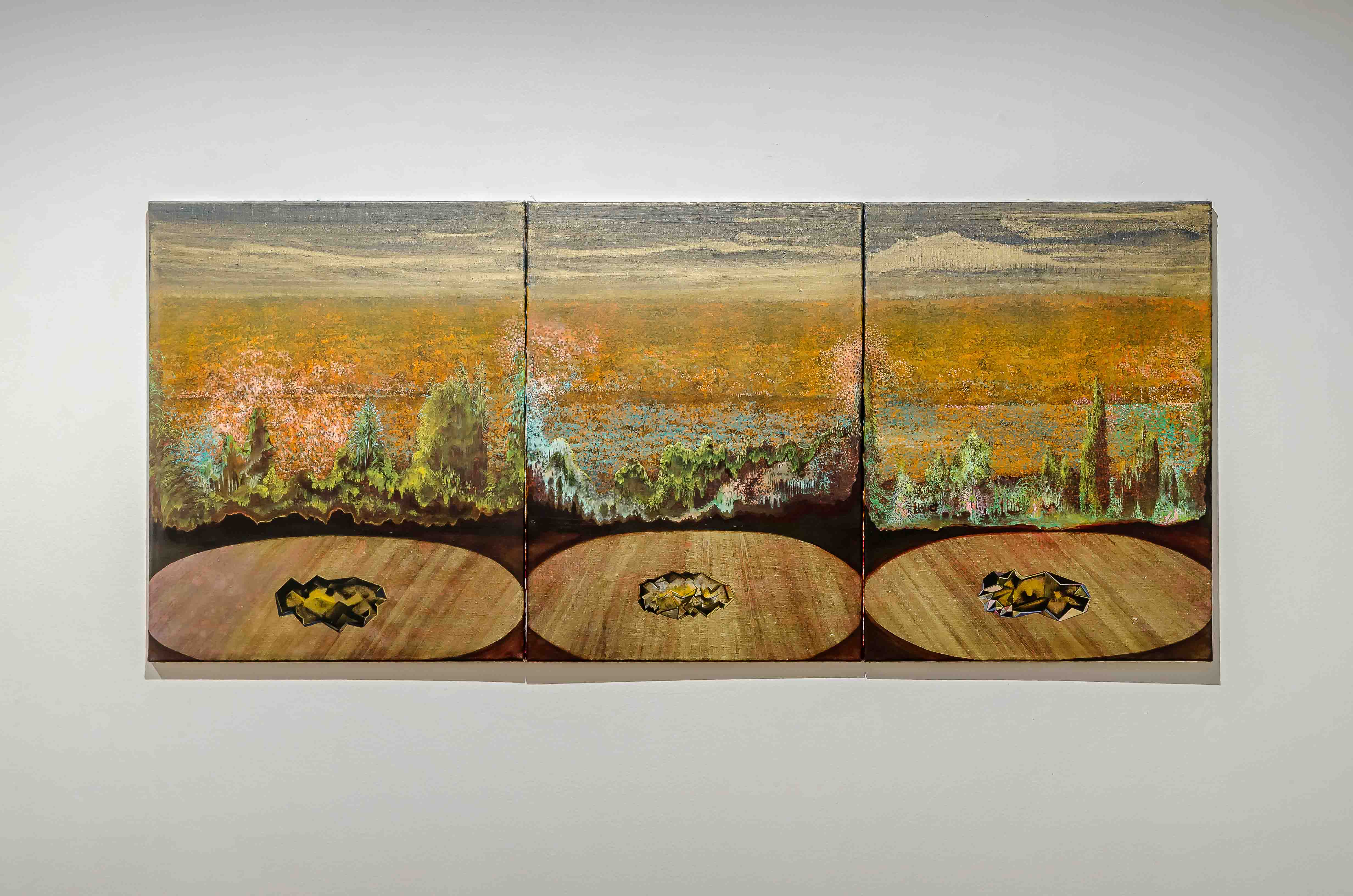
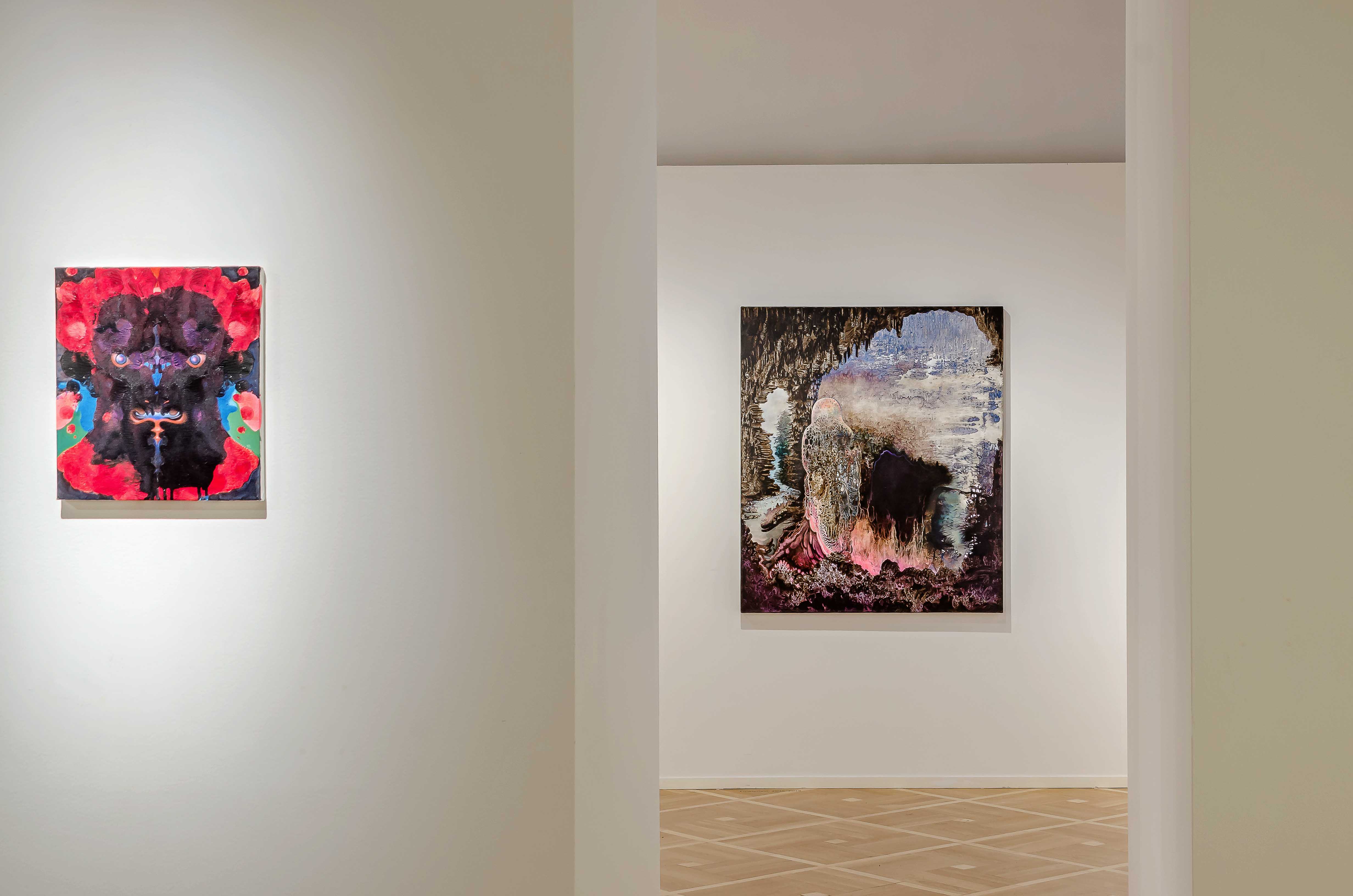
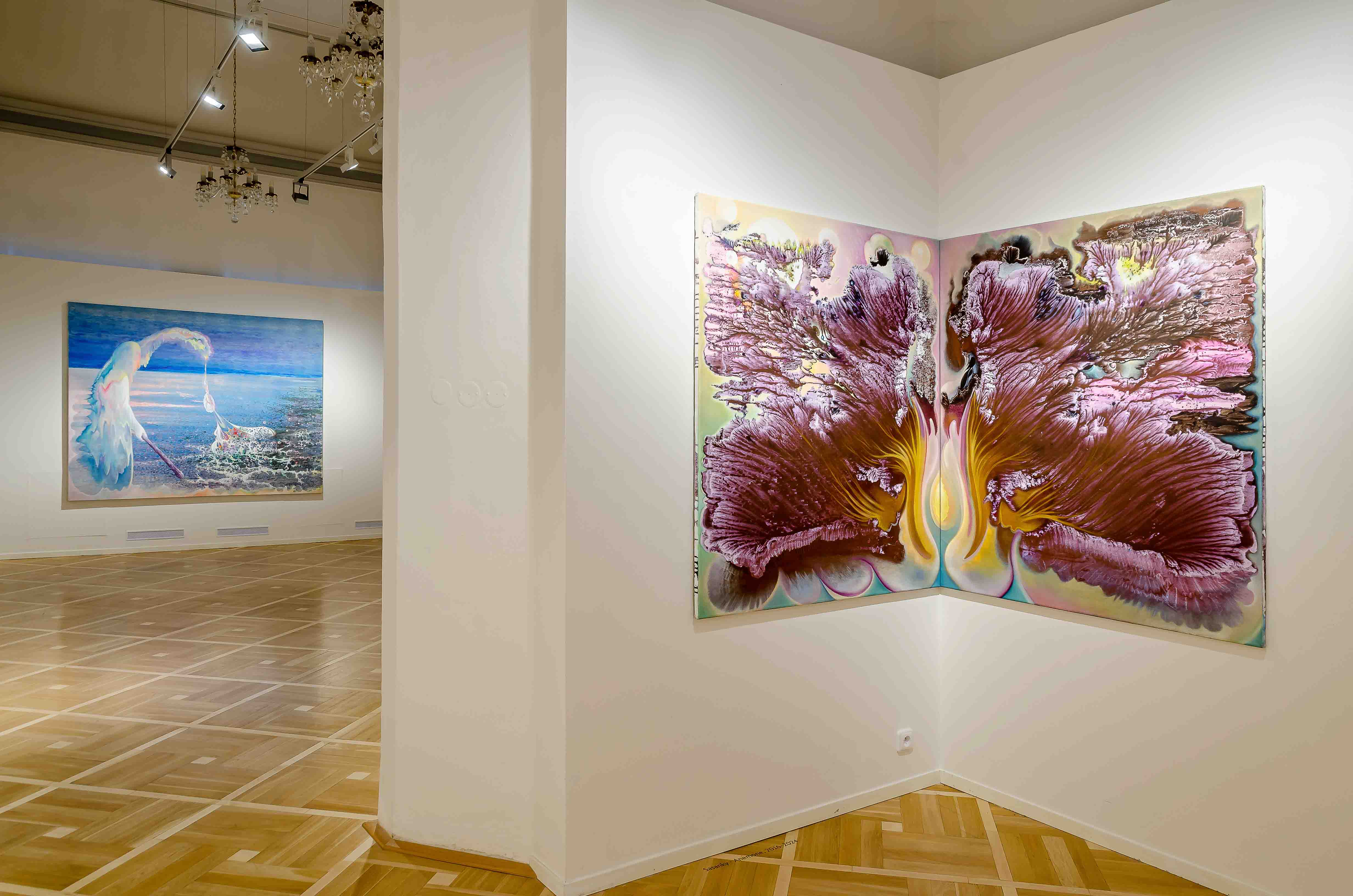
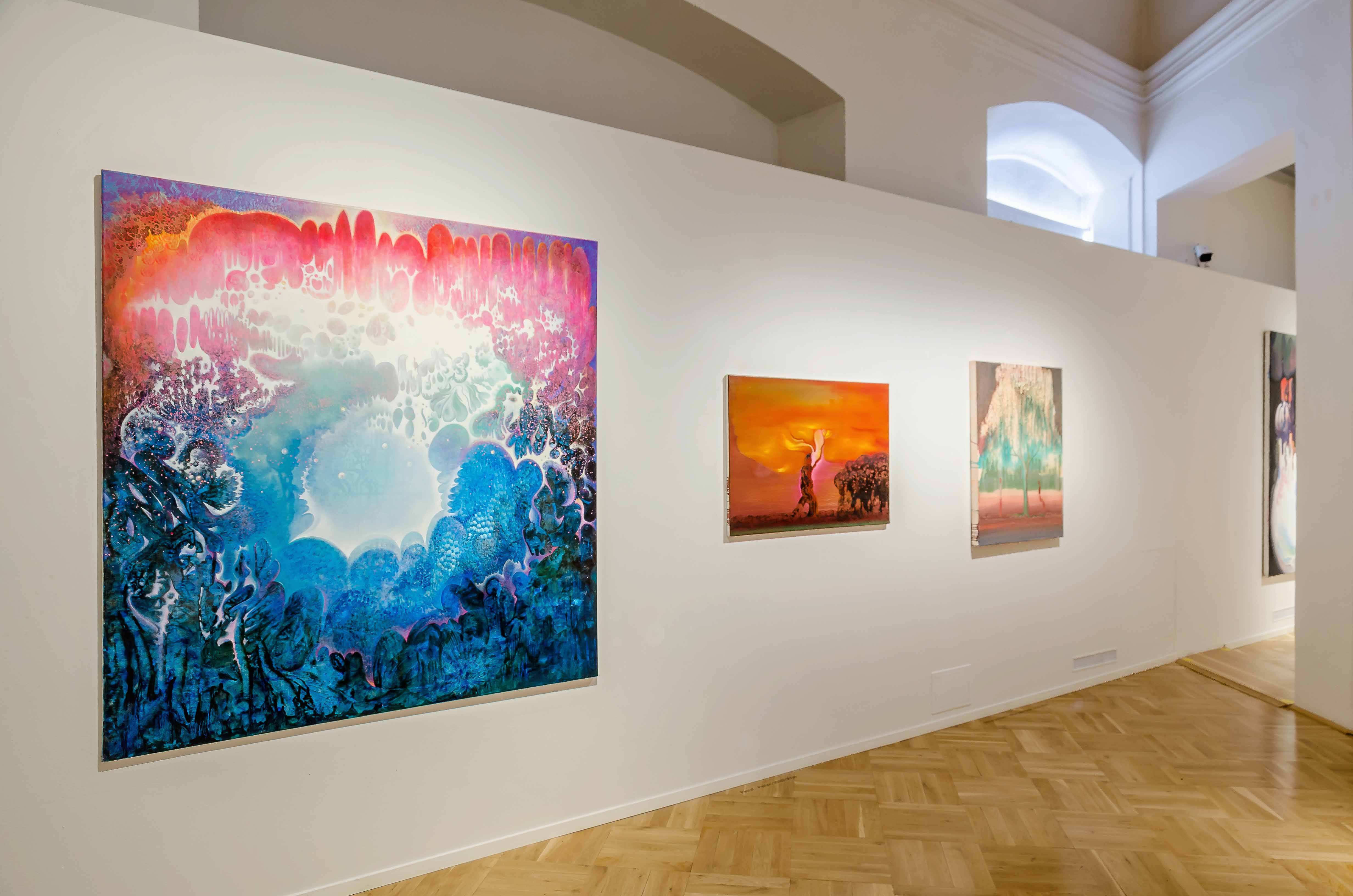
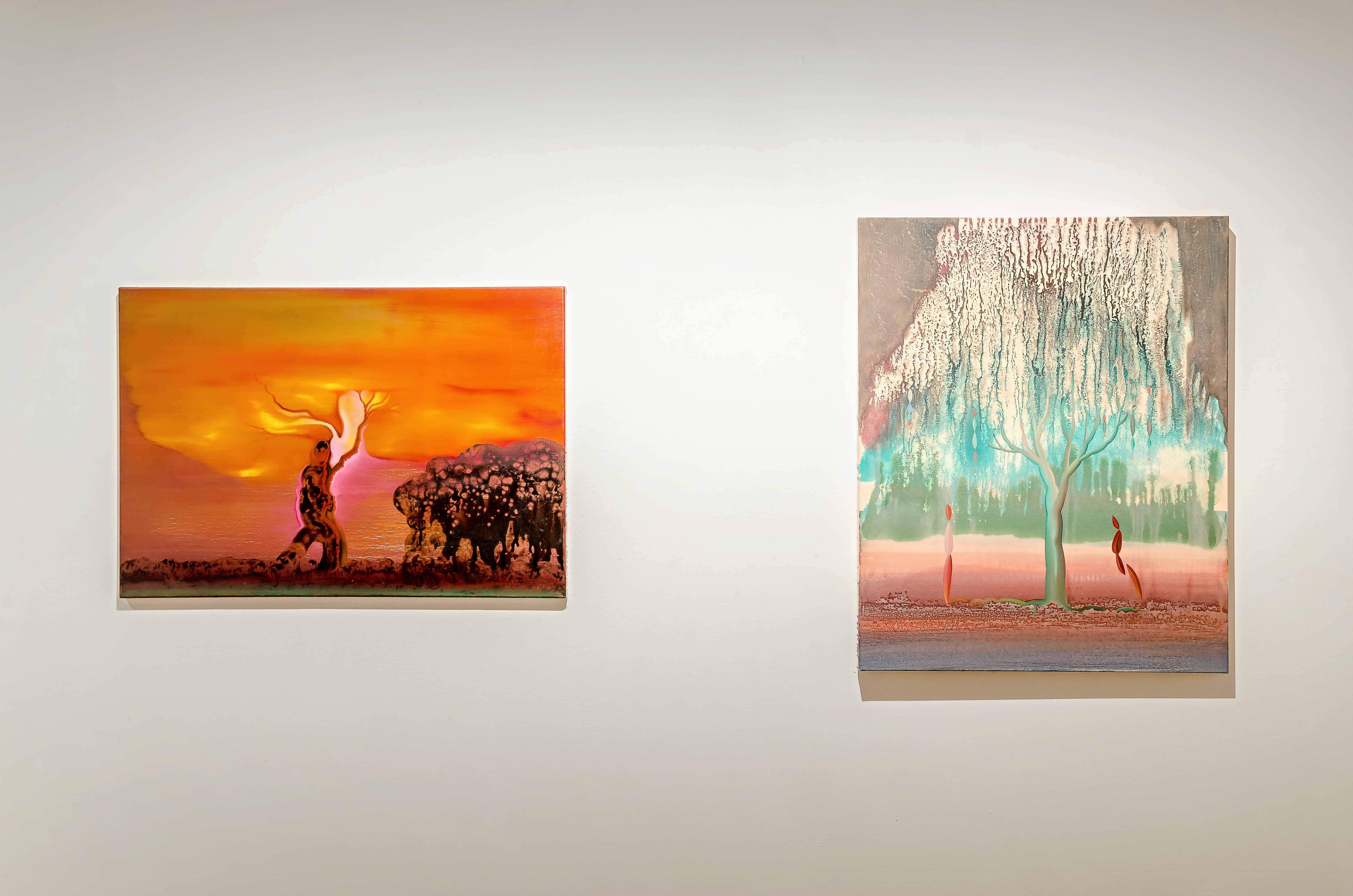
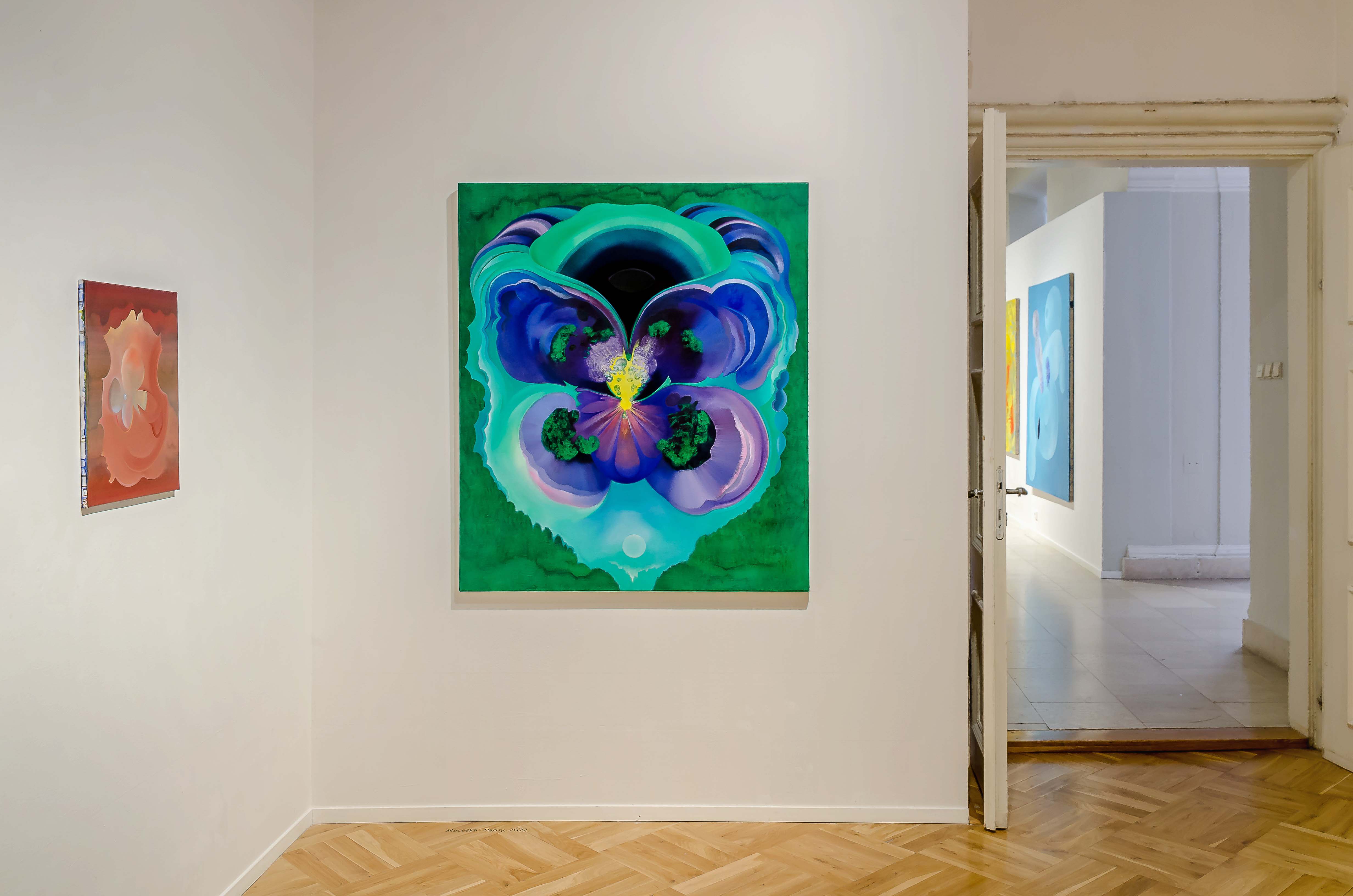
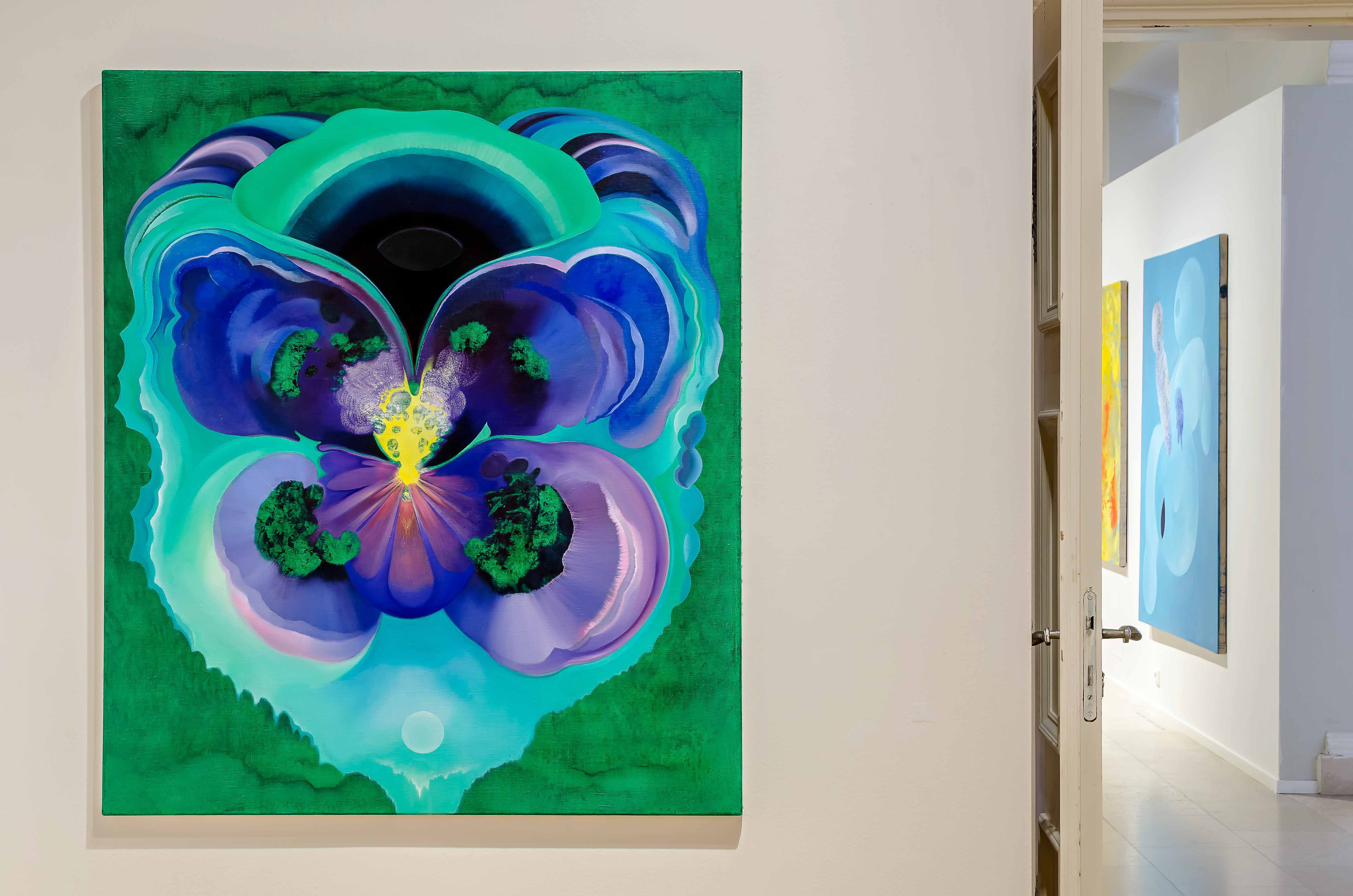
In her latest paintings, a disturbing erotic charge lies hidden beneath layers of glazes and patches of color. The composition, based on a dominant centre, stems from the artist's method of prolonged observation of an initial mark, in which she gradually discerns shapes and nascent elements from which she builds her image. She also employs a special technique of layering oil and acrylic paints, which repel one another. She subsequently corrects the initial pure automatisms with her refined professional eye and painterly intuition. In this way, she creates a tension between structure and amorphousness. Motifs and themes are not fixed points, but floating islands on the water’s surface of the unconscious—they emerge, disappear, and return in new forms.